The Story of the Los Angeles Aqueduct
The Los Angeles Aqueduct transformed Southern California. Completed in 1913, the 233-mile gravity-fed system carried water from the Owens Valley to a rapidly growing Los Angeles and made possible the city's emergence as a major urban center.Praised as one of the great engineering achievements of its era, the aqueduct also became one of California's most controversial public works projects. While it fueled the expansion of Los Angeles, it reshaped Owens Valley and triggered decades of political conflict, environmental change, and debate over water rights in the American West.This section presents a brief overview of the aqueduct's story through historic photographs and commentary, with links to more detailed pages covering its construction, opening, and legacy. |
In This Section |
Owens Valley Before the Aqueduct |
Before construction of the Los Angeles Aqueduct began, Owens Valley was a largely agricultural region sustained by snowmelt flowing east from the Sierra Nevada into the Owens River and Owens Lake.Although isolated from Southern California's growing urban centers, the valley supported ranches, farms, orchards, and small communities that depended heavily on local water resources. |
 |
|
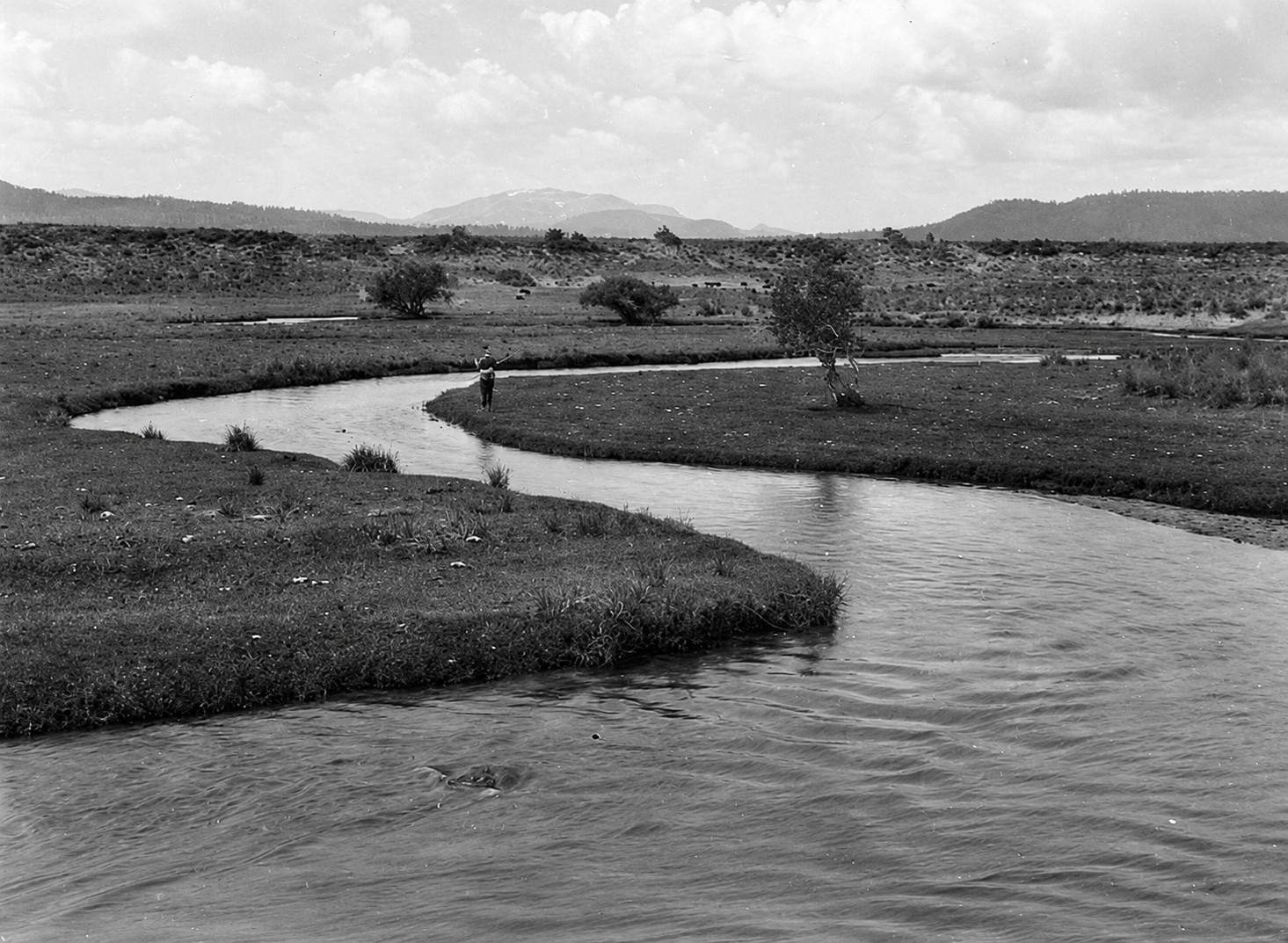
| (1912)* - Owens River in the Owens Valley, showing a lone fisherman along its banks. |
| Historical Notes
The Owens River once carried enough water to sustain a valley of farms, ranches, and irrigation ditches stretching across roughly 75,000 acres. Fed by snowmelt from the Sierra Nevada — including the slopes of Mount Whitney, the highest peak in the contiguous United States — the river filled Owens Lake at the valley's southern end and kept a small but working agricultural economy alive in an otherwise arid region. This photograph was taken in 1912, the last full year before water from this same river began flowing south to Los Angeles. The lone figure on the bank captures something that would soon be gone. Within twelve years of this image, Owens Lake would be dry. |
 |
|
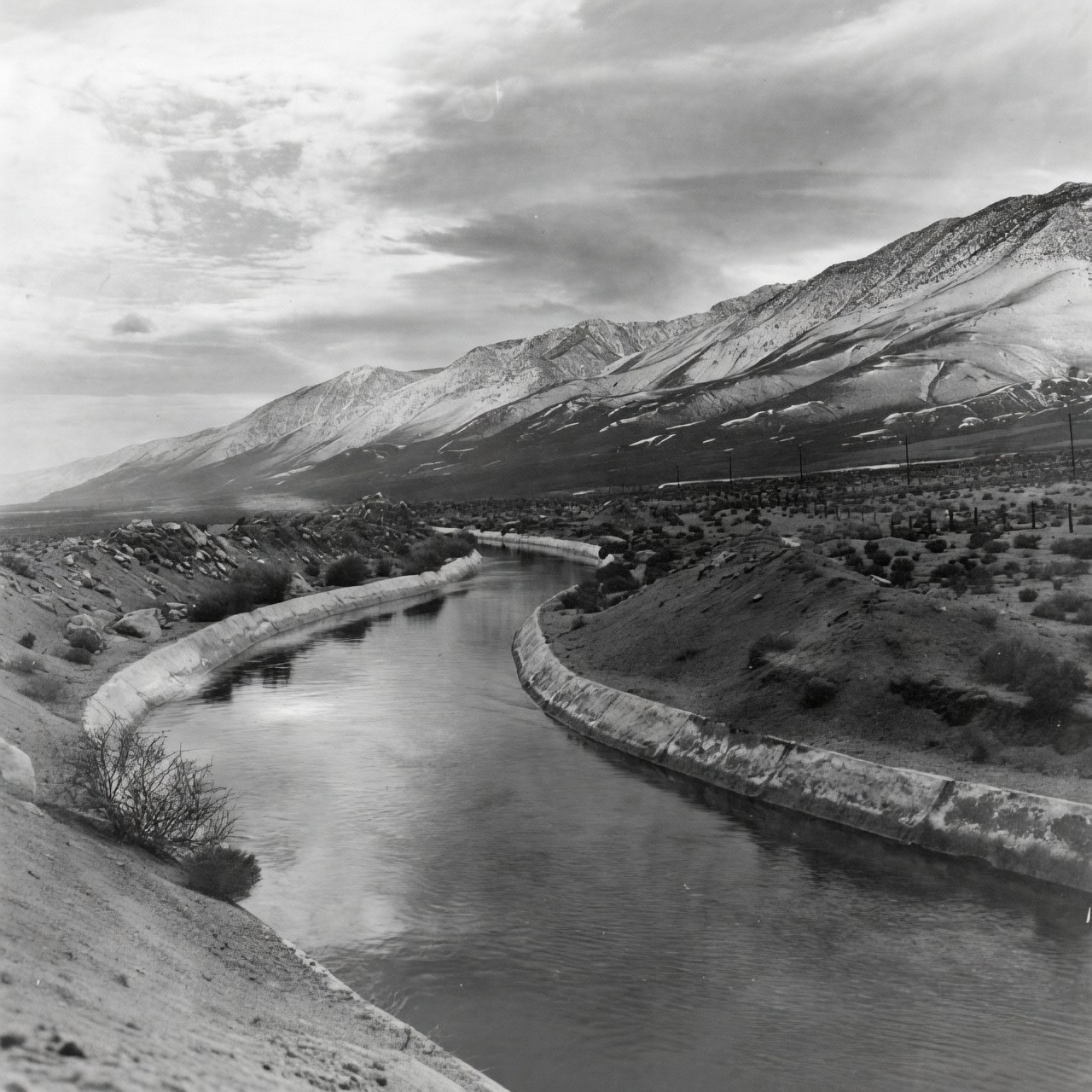
| (1928)* - Los Angeles Aqueduct in the Owens Valley near Alabama Hills, November 24, 1928. |
| Historical Notes
This panoramic view shows the Los Angeles Aqueduct settled into the Owens Valley landscape fifteen years after water first reached Los Angeles. What began as one of the largest construction projects in the American West had become a permanent part of the valley’s geography. The aqueduct followed the natural contours of the land, relying almost entirely on gravity rather than pumps to move water south to Los Angeles. Its visibility across the valley made it both a symbol of engineering achievement and a reminder of water leaving the region. |
Why Los Angeles Needed More Water |
By the beginning of the twentieth century, Los Angeles was growing rapidly. Existing local water supplies from the Los Angeles River and underground wells could no longer support the city's expanding population, agriculture, and development.City leaders feared that without a new water source, Los Angeles would face severe limitations on future growth. Attention soon turned to Owens Valley, where the snow-fed Owens River appeared capable of supplying water on a scale large enough to support the city's long-term ambitions. |
* * * * * |
Mulholland, Eaton, and the Search for Water |
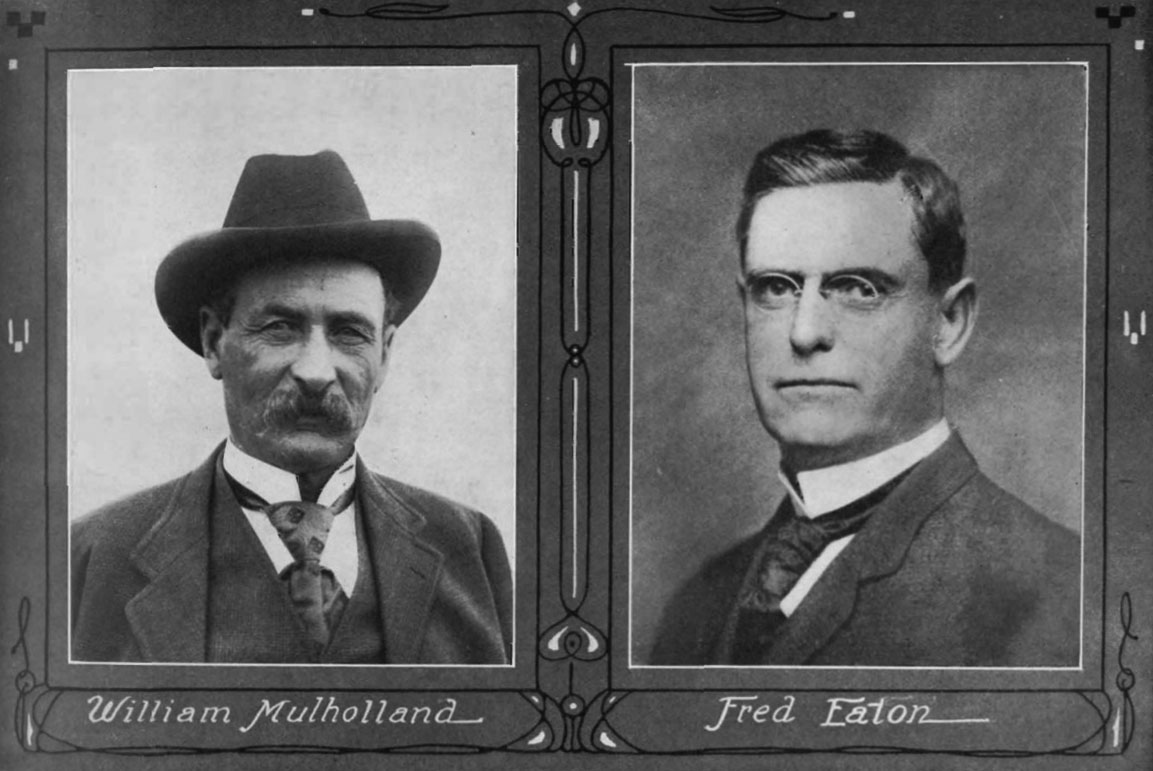
The Los Angeles Aqueduct was shaped largely through the efforts of William Mulholland and Fred Eaton. Their vision, planning, and actions helped launch one of the largest infrastructure projects in the history of the American West. |
 |
|
| (1913)* – Portrait photographs of William Mulholland and Fred Eaton |
| Historical Notes
William Mulholland arrived in Los Angeles in 1877, took a job as a ditch tender for the city water company, and taught himself engineering through reading and field work. He rose from that entry-level post to superintendent of the city's new municipal water department by 1902 — one of the more remarkable careers in the history of American public works. He directed every phase of the aqueduct's design and construction. Fred Eaton, a former mayor of Los Angeles, was the first to identify the Owens River as a viable source for the city. In the early 1900s he traveled to the valley and quietly acquired options on key water-bearing properties, while allowing local landowners to believe he was working on a federal irrigation project. The partnership between Mulholland and Eaton launched the aqueduct — but it eventually collapsed over a land dispute that neither man would concede. |
 |
|
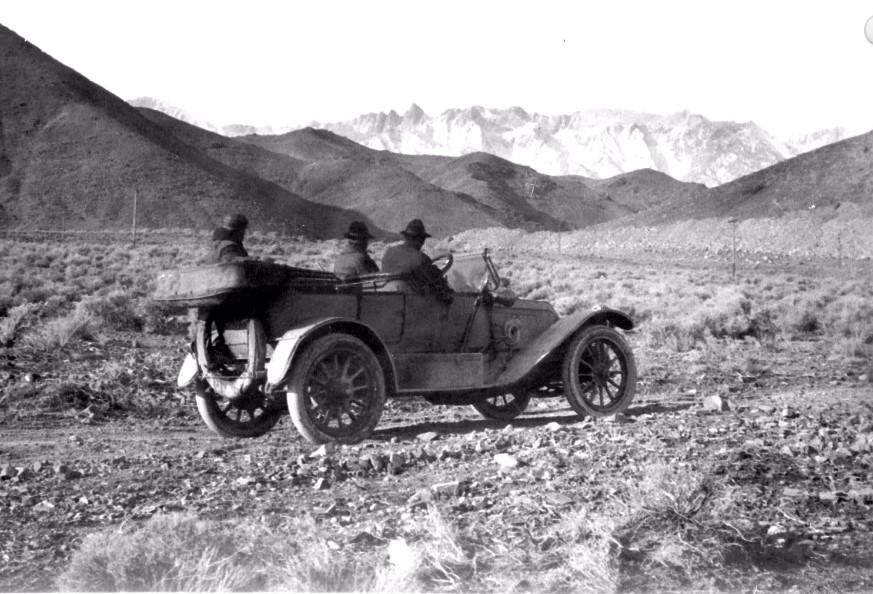
| (ca. 1906)* – William Mulholland and two companions in the Owens Valley, looking toward the snow-covered Sierra Nevada. |
| Historical Notes
This image shows Mulholland during the survey years, standing in the valley he had decided would supply Los Angeles. In July 1905, the day after the Board of Water Commissioners privately approved the aqueduct plan, the Los Angeles Times broke the story under the headline “Titanic Project to Give City a River.” Land values in the San Fernando Valley surged almost immediately, and accusations of insider dealing followed shortly after. The route crossed more than 200 miles of federal land, and Los Angeles needed government approval before a single shovel could turn. Senator Frank Flint carried the legislation in Washington, and President Theodore Roosevelt sided with the city, deciding that supplying a major urban population outweighed the interests of a smaller agricultural valley. Construction started on September 20, 1907. |
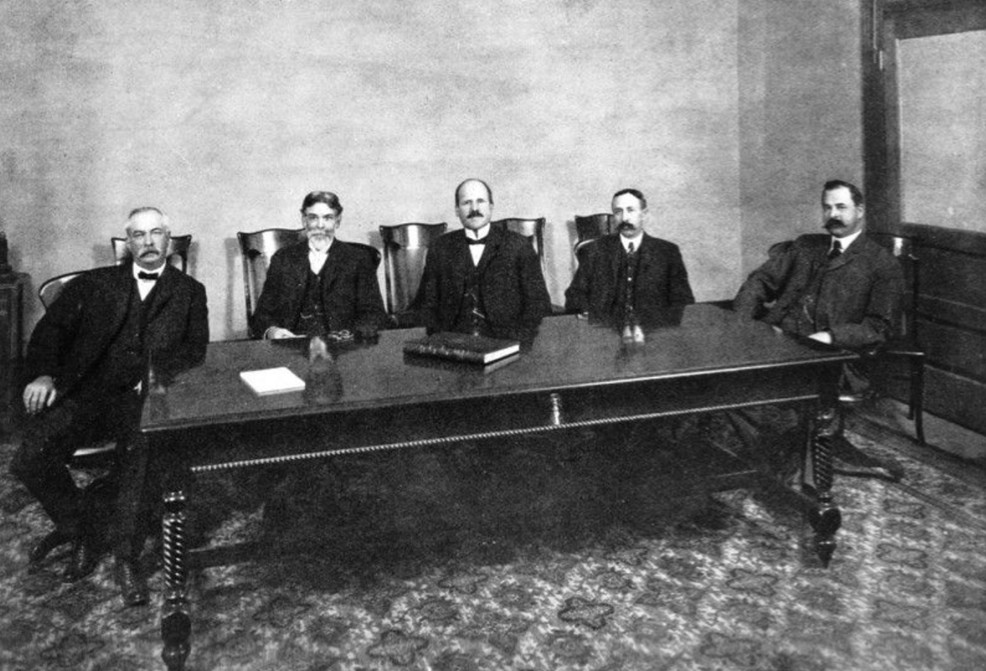 |
| (ca. 1905)* - The Board of Water Commissioners of the City of Los Angeles. Left to right: John J. Fay, J. M. Elliott, Moses H. Sherman, William Mead, and Fred L. Baker. |
| Historical Notes
These five men oversaw the critical early decisions behind the aqueduct — approving land purchases in Owens Valley, authorizing the bond measures that funded construction, and appointing William Mulholland as chief engineer. Without their decisions, the project could not have moved forward. The board's most scrutinized member was Moses H. Sherman, third from left. Sherman served on the board while simultaneously holding interests in San Fernando Valley land. In July 1905, the day the board privately approved the aqueduct, a syndicate connected to Sherman quietly exercised an option on 16,200 acres of valley farmland. No direct evidence of an insider tip was ever proved — but the overlap between his public role and his private investments has been debated ever since. |
* * * * * |
Building the Los Angeles Aqueduct |
With financing approved and federal rights of way secured, construction of the aqueduct began on September 20, 1907. The route covered 233 miles of desert, mountain, and open basin terrain. Workers had to build 120 miles of railroad track, 500 miles of new roads, and dozens of supply camps in country that had almost no existing infrastructure. The entire system was designed to move water by gravity, which meant every section had to be surveyed and graded to precise tolerances from start to finish. It was completed ahead of schedule. |
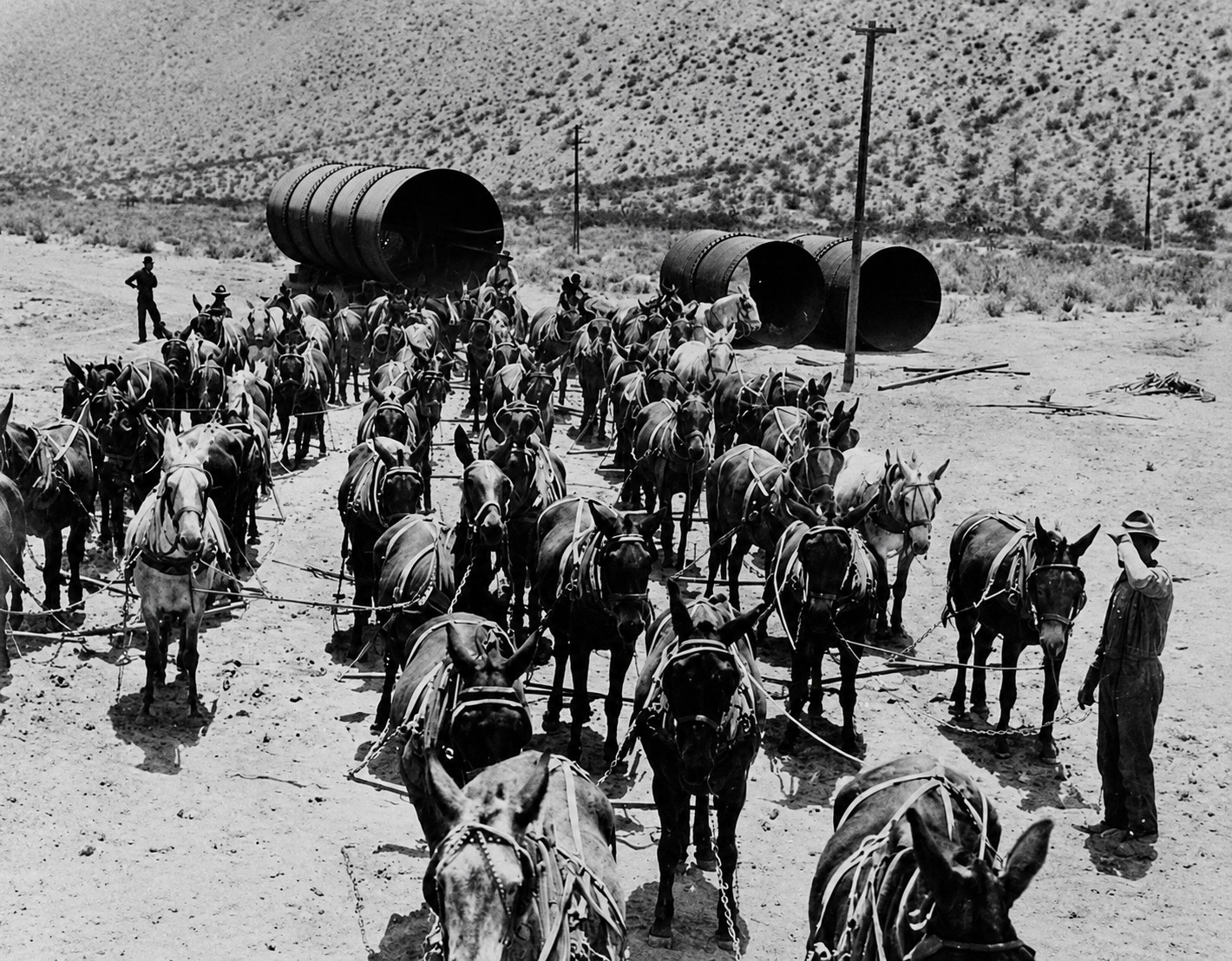 |
| (1912)* - A 52-mule team hauls sections of steel pipe across the desert during construction of the Los Angeles Aqueduct. Work on the aqueduct began September 20, 1907. |
| Historical Notes
Much of the aqueduct crossed land with no roads, no rail lines, and no towns within reach. Heavy pipe, cement, tools, and food had to come in by mule team, wagon, or the new railroad the project itself built. At one point, the city purchased 28 caterpillar tractors to speed up short-distance hauling — one of the first large public works projects to use that technology. When maintenance costs proved too high, crews went back to mules. The finished aqueduct included 97 miles of covered concrete conduit, 43 miles of tunnel, 24 miles of open canal, and 12 miles of steel siphon. The men who built it worked in temperatures that ranged from desert heat above 100 degrees to Sierra foothills cold. At least 43 workers died during construction. |
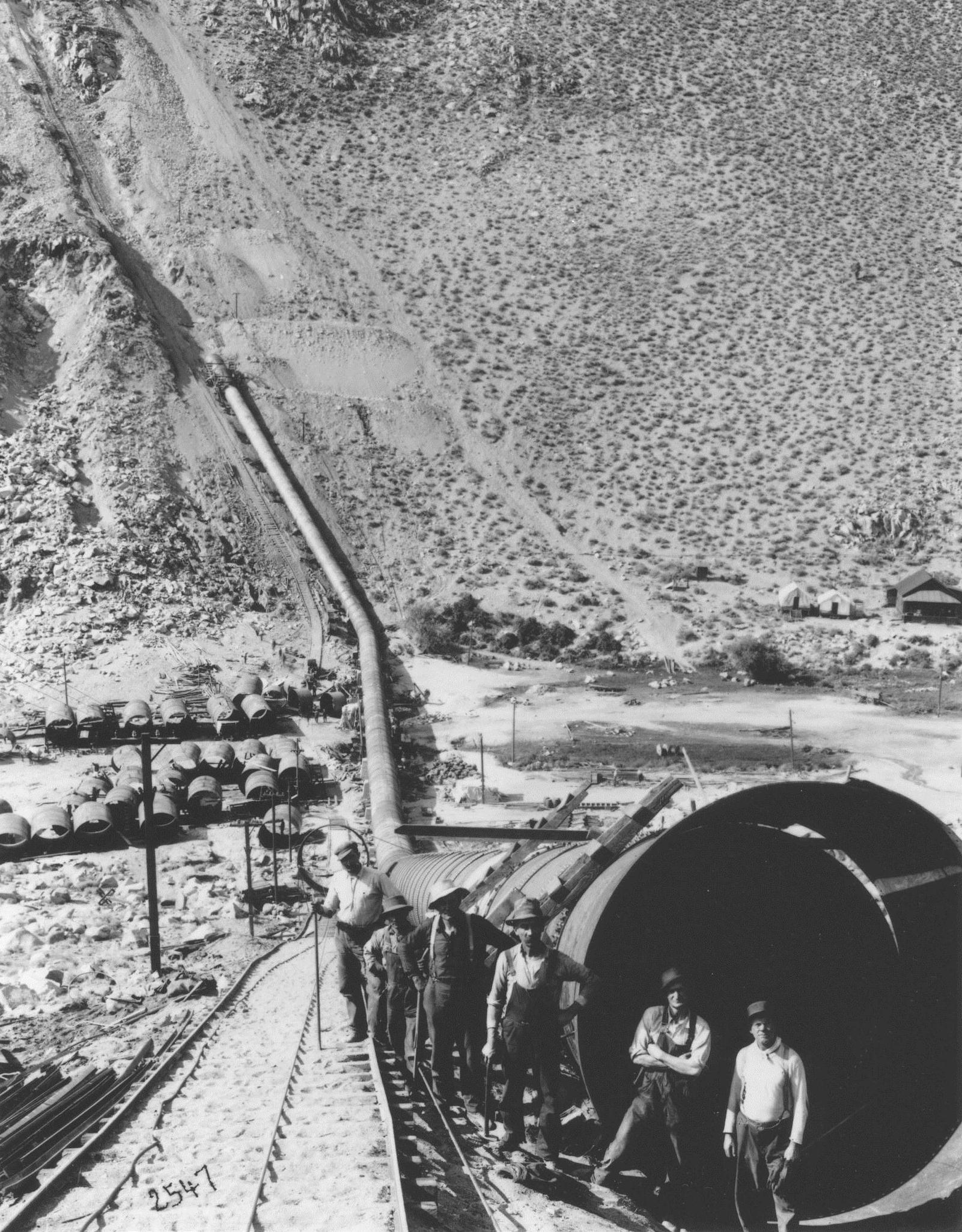 |
|
| (ca. 1912)* - Aqueduct workers posing beside a newly completed section of pipeline. |
| Historical Notes
At its peak, the project employed more than 3,900 workers at a time. They came from across the country and from abroad, earning about two dollars a day and living in camps stretched along the full length of the route. The work was demanding — tunneling, concrete forming, pipe cutting, and hauling in conditions that shifted from brutal heat to hard mountain cold. Crews working on the Elizabeth Tunnel through the San Fernando Mountains set an American record for hard rock tunnel driving, advancing 604 feet through solid granite in a single month. The project was finished six months ahead of schedule. |
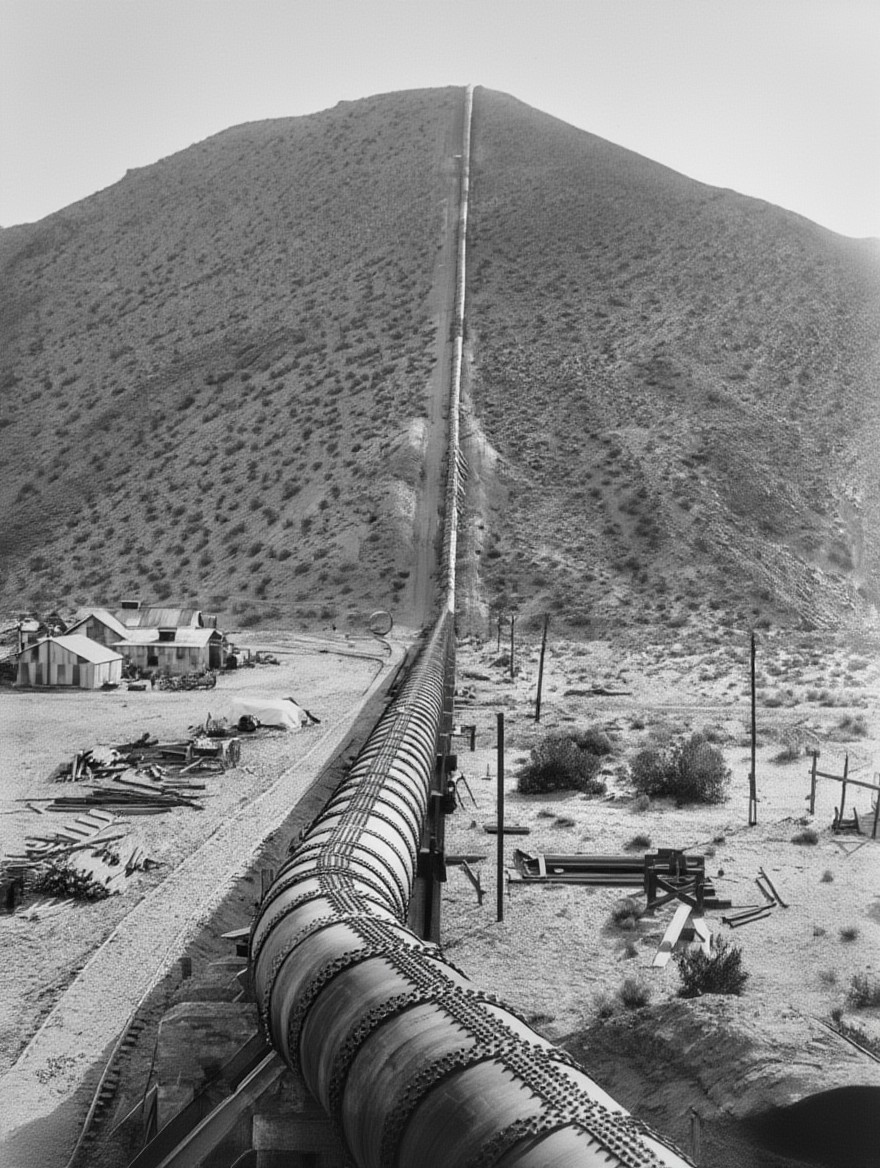 |
|
| (ca. 1912)* - The Jawbone Siphon on the Los Angeles Aqueduct, one of twelve inverted steel siphons that carried water across deep desert canyons. |
| Historical Notes
Where the aqueduct route crossed a deep canyon, engineers could not simply run a canal across the gap. Instead, they built inverted siphons — large steel pipes that dropped water to the canyon floor and forced it back up the other side using the pressure built up during the descent. No pumps were needed. The system relied entirely on gravity and careful calculation. The Jawbone Siphon, crossing a canyon in the Mojave Desert, was one of twelve such structures totaling 12 miles along the route. Before construction began, the city hired three of the most prominent engineers in the United States — including Frederick P. Stearns, then president of the American Society of Civil Engineers — to review Mulholland's plans. All three confirmed the design was sound. When the aqueduct opened in 1913, it was the longest in the world. |
 |
|
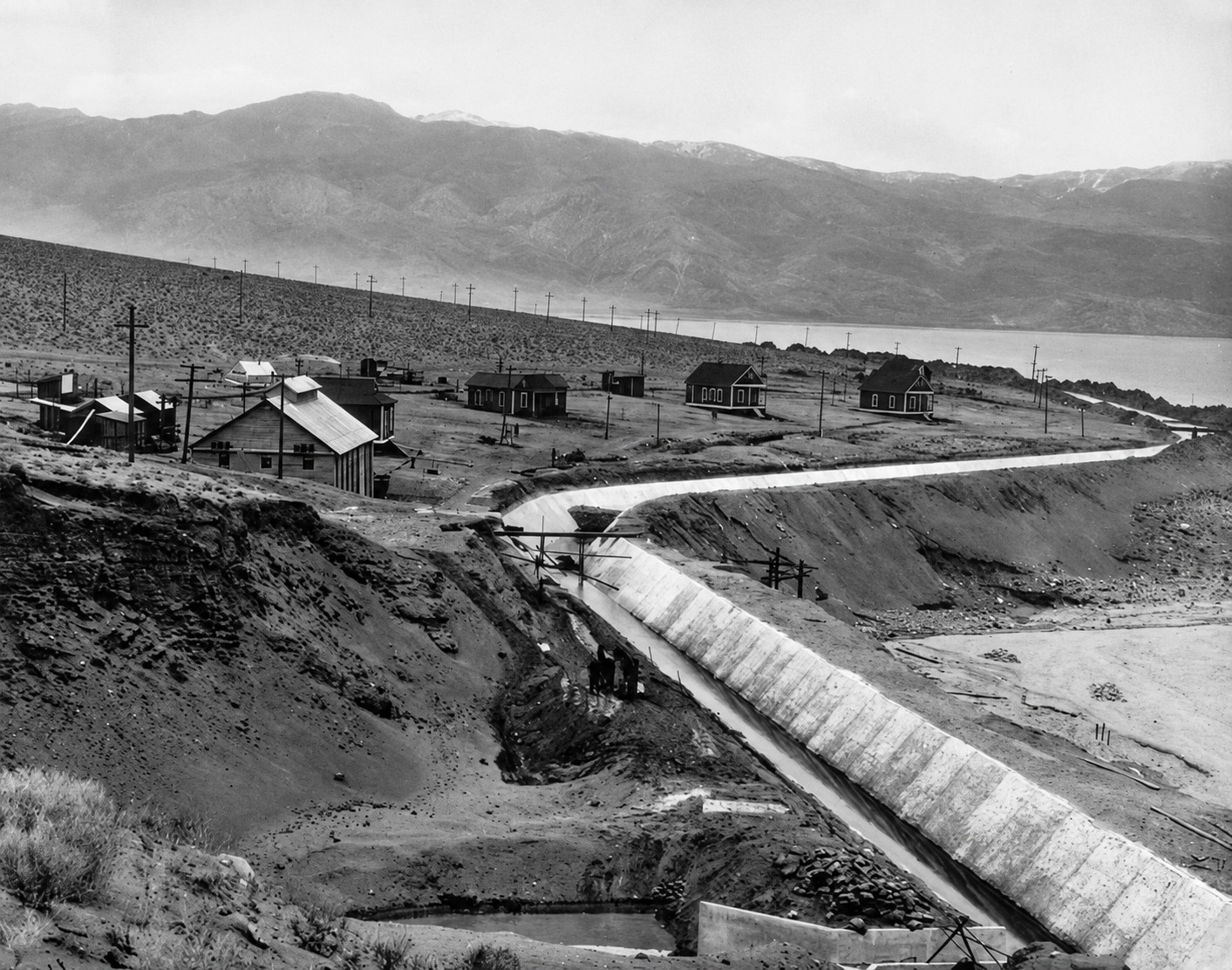
| (ca. 1911)* - Owens Valley during the planning and construction period of the Los Angeles Aqueduct. In this view, the aqueduct skirts around Owens Lake, a closed basin lake with no outlet to the ocean. |
| Historical Notes
Owens Lake was a closed basin — water flowed in from the river but had nowhere to go except evaporation. For centuries, the inflow and evaporation balanced each other, sustaining a body of water that once covered more than 100 square miles. The lake supported a small salt industry, steamship traffic, and abundant wildlife. The aqueduct intake was designed to capture the river's flow before it ever reached the lake. By 1924, the lake was essentially dry. The exposed lakebed became one of the largest sources of dust pollution in the United States, generating alkali storms that closed Highway 395 and damaged the health of valley residents. Los Angeles has spent more than a billion dollars on dust mitigation at Owens Lake — a cost that continues today. Click HERE for full feature on the Construction of the LA Aqueduct. |
* * * * * |
Opening Day in 1913 |
The completion of the Los Angeles Aqueduct marked a defining moment in the city's history. After more than six years of construction, the project moved from engineering challenge to public celebration. |
 |
|
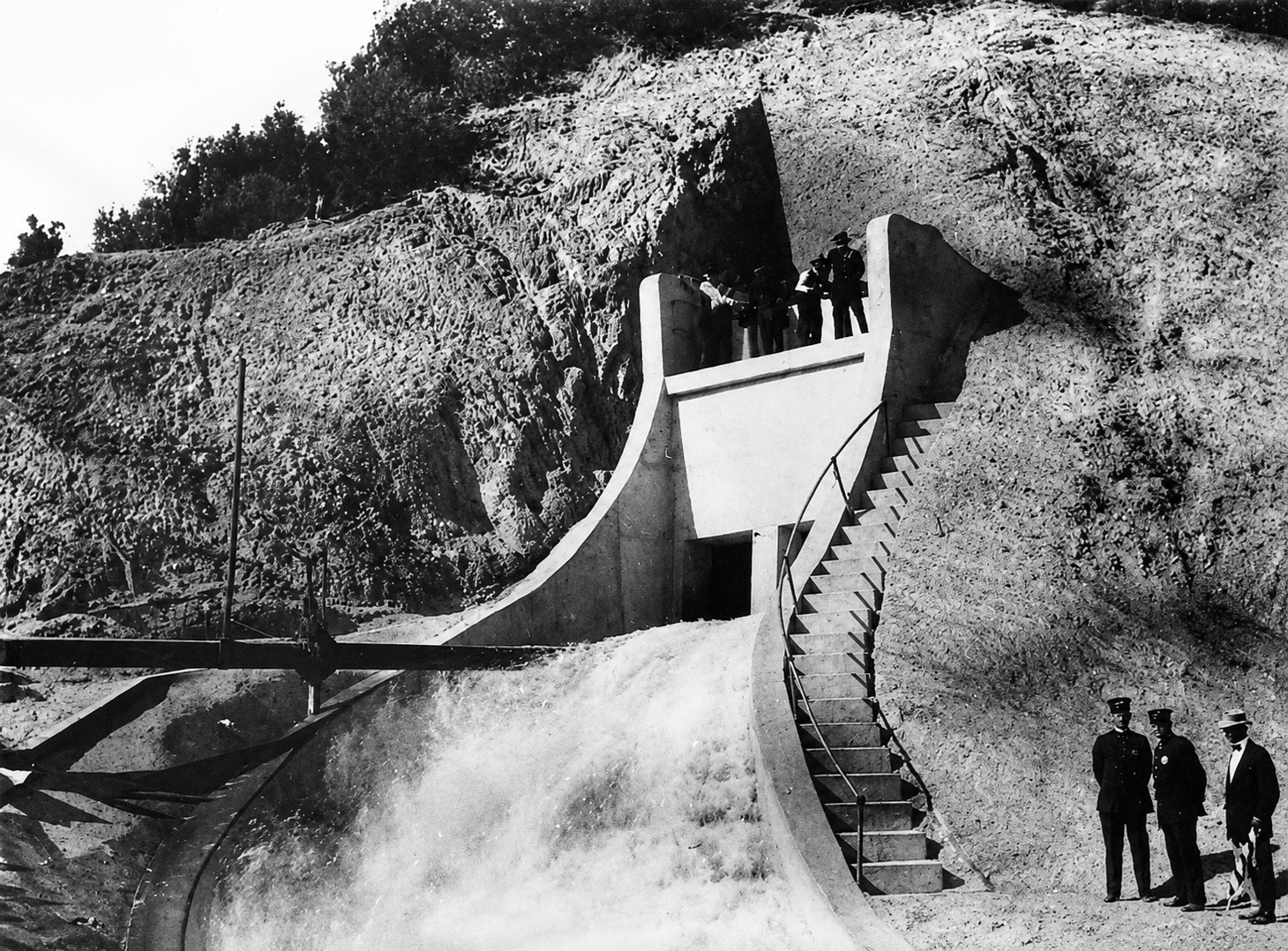
| (November 5, 1913)* - Official Opening of the water gates of the Los Angeles Aqueduct. |
| Historical Notes
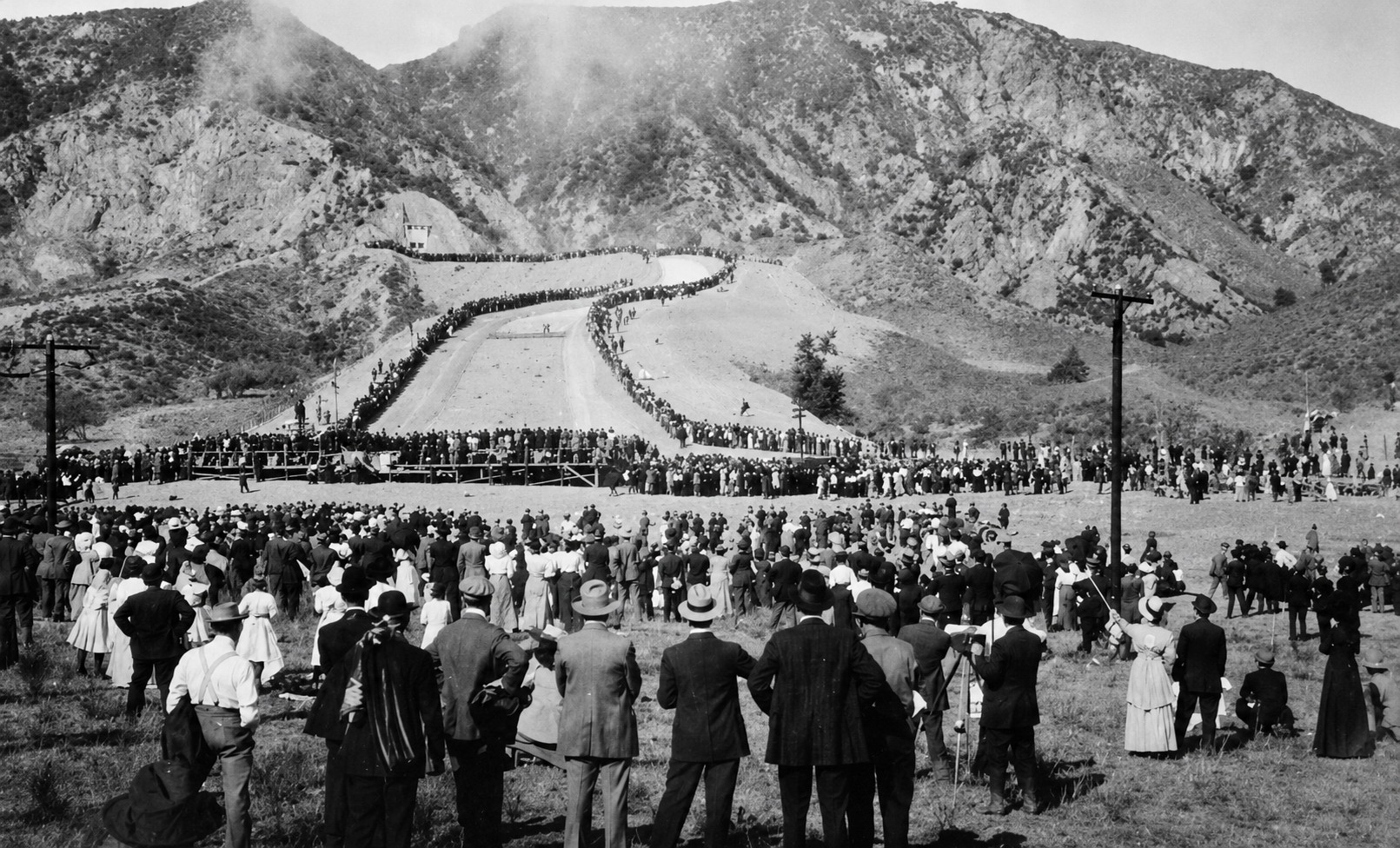
The opening ceremony took place on November 5, 1913 at the Cascades in the northern San Fernando Valley. An estimated 30,000 people arrived by train, streetcar, wagon, and automobile — one of the largest public gatherings Southern California had seen. When Mulholland opened the gates and water roared down the Cascades, the crowd reportedly rushed forward with cups and hats to catch it. His words that day became famous: “There it is. Take it.” In the years that followed, Los Angeles grew at a pace that would not have been possible otherwise. Adjacent communities petitioned to annex themselves to the city in large numbers, eager for access to the water. The city's population, around 300,000 at the time of opening, expanded into the millions in the decades ahead. |
 |
|
| (November 5, 1913)* - Crowds gather at the Cascades as the first water flows south through the Los Angeles Aqueduct. William Mulholland, chief engineer and builder of the aqueduct, stands with H. A. Van Norman, who later served as Chief Engineer and General Manager of the Water Bureau. |
| Historical Notes
Harvey Van Norman had worked alongside Mulholland throughout construction and would go on to lead the water bureau through some of its most difficult years, including the Owens Valley conflicts of the 1920s. The two men in this image represent a generation of engineers who built the aqueduct and then spent decades defending it. For the crowd behind them, the day felt like pure celebration. But in Owens Valley, the same gates opening in Los Angeles marked the beginning of a long decline. Click HERE to see more on the Opening of the Los Angeles Aqueduct. |
* * * * * |
Conflict and Resistance in Owens Valley |
The opening of the aqueduct did not bring closure to the story. Instead, it marked the beginning of a difficult new period in Owens Valley, as the long-term effects of water diversion became increasingly clear. |
 |
|
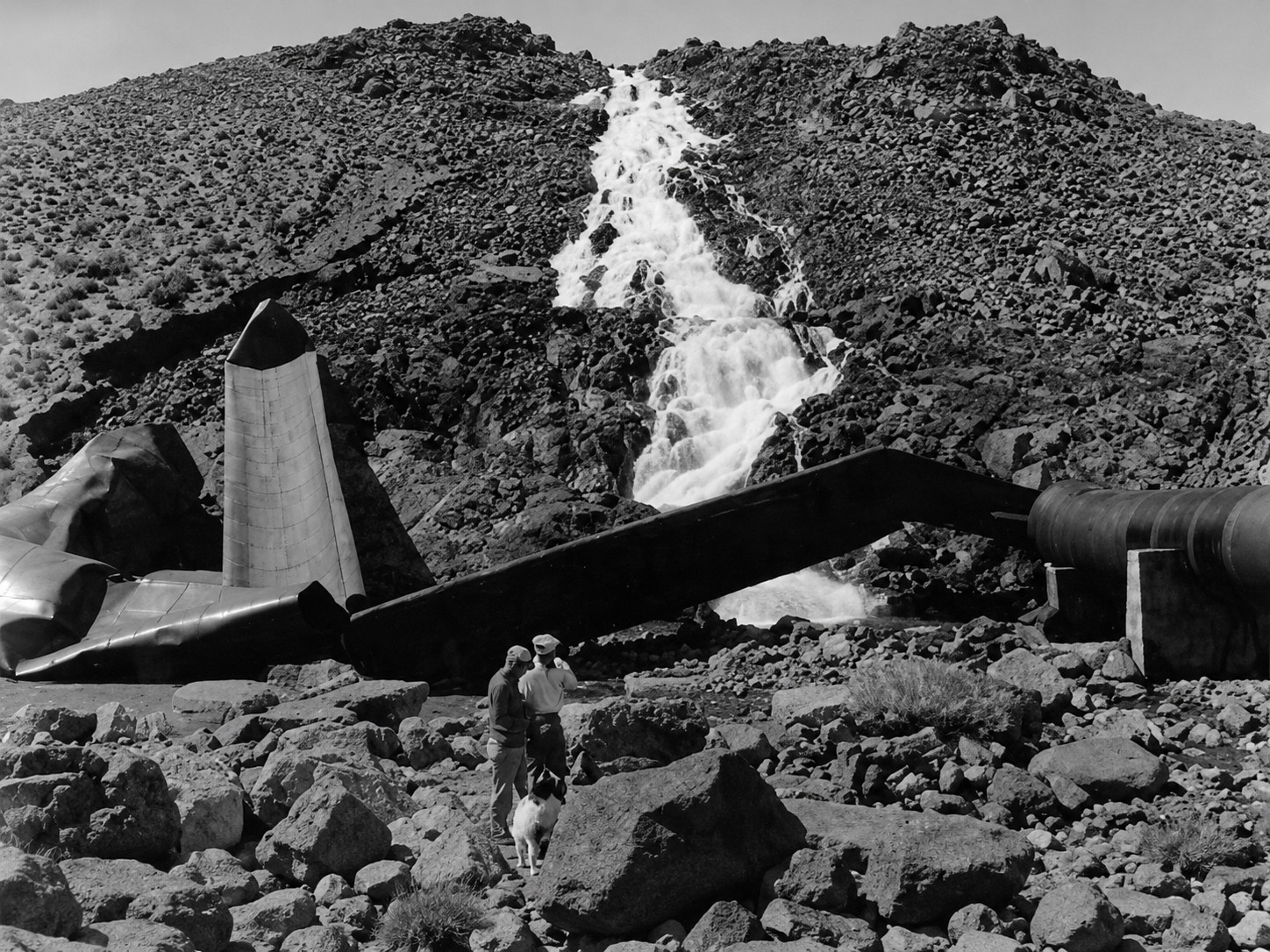
| (1924)* – The scene at No Name Canyon after a dynamite attack destroyed 400 feet of pipe. |
| Historical Notes
By the early 1920s, Los Angeles had purchased a large portion of the valley's farmland and was accelerating its water exports. Many residents felt they had been left with no other recourse. In 1924 alone, valley residents occupied the Alabama Gates — the aqueduct's main control structure — for four days in a public act of protest, and dynamite attacks on the aqueduct began shortly after. The No Name Canyon explosion was one of at least seventeen acts of sabotage between 1924 and 1927. The Los Angeles Times covered the attacks as an insurrection. Guards were posted, investigations launched, and legal pressure applied. But the conflict wound down not through resolution — through exhaustion. By the late 1920s, Los Angeles owned roughly 90 percent of the valley's water rights, and the agricultural economy that had motivated the resistance was effectively gone. |
* * * * * |
Progress, Loss, and a Lasting Debate |
The Los Angeles Aqueduct brought the city a reliable water supply and enabled growth that would not have been possible otherwise. In the decades after 1913, a metropolitan region of millions took shape in a basin that receives only about 15 inches of rain per year. The water made that possible. At the same time, Owens Valley lost most of its agricultural economy, its lake, and much of its groundwater over the course of the twentieth century. Environmental lawsuits filed by Inyo County beginning in the 1970s eventually compelled Los Angeles to spend more than a billion dollars on mitigation programs, and water has been partially returned to the lower Owens River. The aqueduct's legacy remains genuinely contested — because what it represents depends largely on perspective. |
Another Perspective — Robert V. Phillips
"...the businesses and the homes were leased or rented back to the same people (residents of Owens Valley) to pursue their same activity. Most of them did and very successfully. Because, by that time, the impact of the city's improvements in the Owens Valley, and I don't mean the aqueduct, I mean in connection with the construction of the aqueduct, the city built a broad-gauge railroad from Mojave to Lone Pine to connect with the narrow gauge railroad. So for the first time the Owens Valley had rail service to ship any products it had, including ranch products out of the city to Los Angeles. The City used its influence with the State of California to have the highway paved from Mojave to the Owens Valley, and that was done. So access to the Owens Valley because of the City's work, in its own behalf obviously, but still it was there and available to anybody that wanted to use it, both the railroad and the highway. The city built power plants in connection with the construction of the aqueduct, and those plants for a long time provided power to the Owens Valley, which didn't have it before the city came in there with the aqueduct construction.
So there were a lot of benefits that occurred that, in my readings and listening to too many people that have no idea that those things happened or don't wish to... admit that those things happened."
— Robert V. Phillips, Chief Engineer and General Manager of DWP, 1972–75
(Both Mr. Phillips and his father knew and worked with Mulholland and Van Norman.)
Read more of an Insightful Interview with Robert V. Phillips:
Explore More Aqueduct History |
Research, writing, and image curation by Jack Feldman, Water and Power Associates, with editorial assistance.
* * * * * |
Recommended Reading
William Mulholland and the Rise of Los Angeles
By Catherine Mulholland
The Water Seekers
By Remi Nadeau
Vision or Villainy
By Abraham Hoffman
Beyond Chinatown
By Steven Erie
Cadillac Desert: The American West and Its Disappearing Water
By Marc Reisner
References and Credits
* DWP - LA Public Library Image Archive
^ DWP - The Story of the Los Angeles Aqueduct
^*L.A. Aqueduct Centennial 2013
^# Claremont Colleges Digital Library
*^Wikipedia: California Water Wars; Owens River
< Back