2nd Street Tunnel - Bunker Hill
 |
|
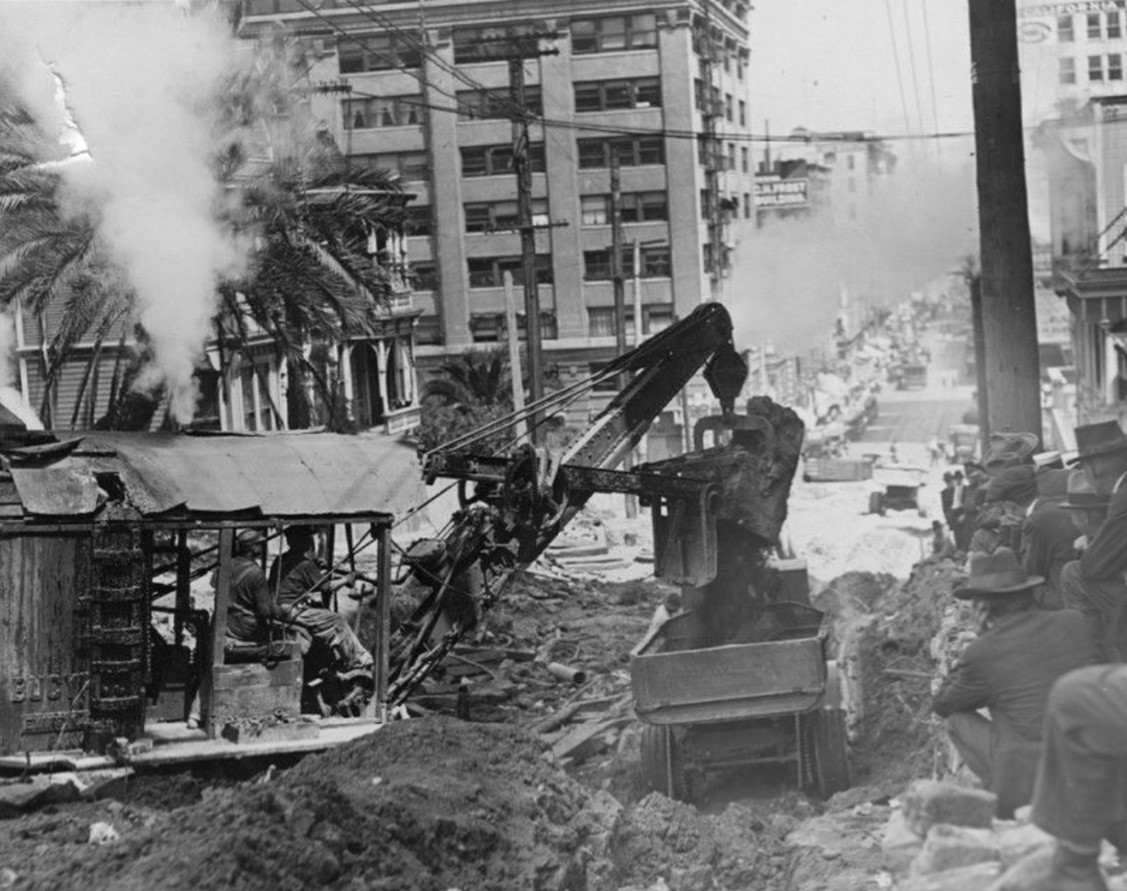
| (1921)* - Two men seated in the cabin of a Bucyrus steam shovel operate the machine as steam rises from the boiler. One man works the controls while another guides the cables that lift and dump earth into a waiting truck. They are cutting into Bunker Hill to create the eastern approach to the 2nd Street Tunnel. |
Historical Notes The 2nd Street Tunnel was built to relieve congestion on the older 3rd Street Tunnel and to provide a direct east–west route through Bunker Hill. Construction began in 1916 but was delayed for years by lawsuits over property and access rights. Serious excavation did not begin until April 1921, when steam shovels finally started carving through the hill’s shale and sandstone. |
 |
|
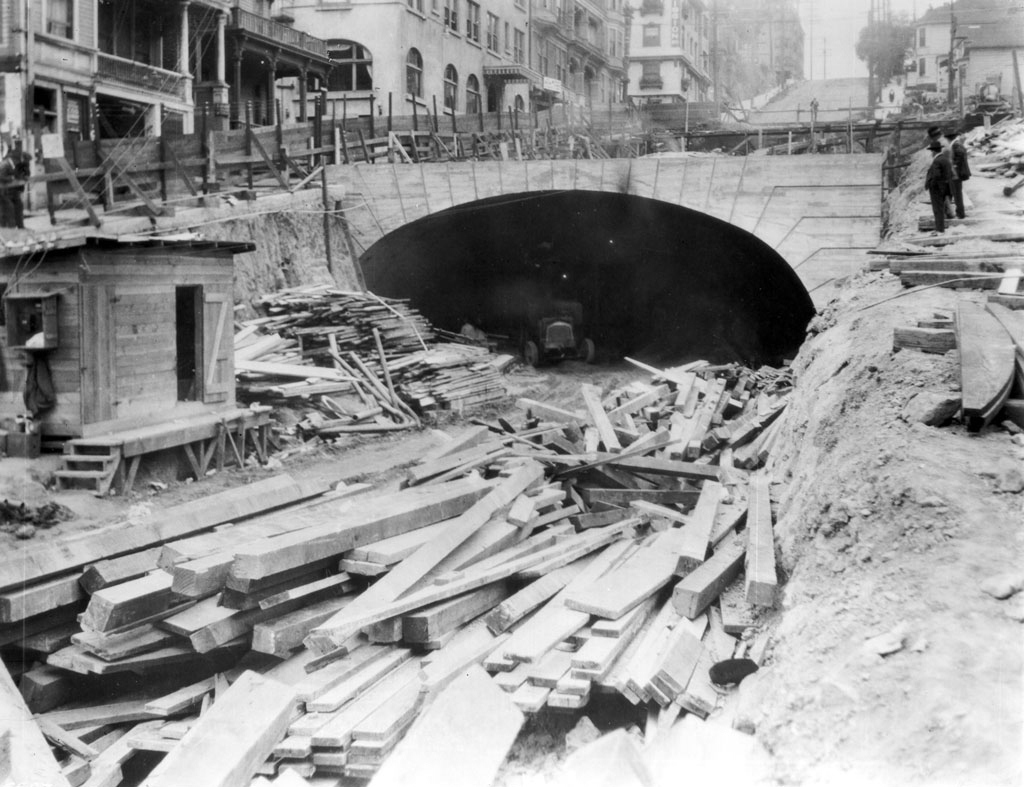
| (ca. 1921)* - Hill Street entrance to the 2nd Street Tunnel under construction. A trench reinforced with heavy lumber leads to the arched tunnel opening. Temporary sheds and scaffolding line the street, while nearby office buildings rise above the work site. |
Historical Notes This view shows the eastern portal at Hill Street during the most difficult phase of construction. Engineers had to stabilize surrounding streets and buildings while boring under Bunker Hill. For years, delays and cost overruns made the tunnel a public joke, with many doubting it would ever be finished. |
 |
|
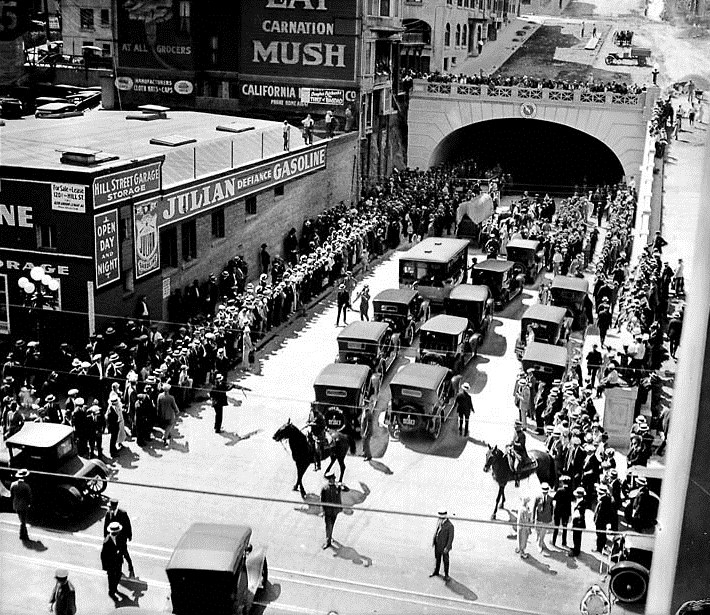
| (1924)* - Grand opening of the 2nd Street Tunnel on July 25, 1924. City officials and invited guests gather as mounted police hold back crowds. |
Historical Notes After nearly eight years of delays, the 2nd Street Tunnel officially opened on July 25, 1924. The completed tunnel stretched about 1,500 feet beneath Bunker Hill and immediately became a vital downtown route. Its white glazed tile walls were intended to improve visibility and cleanliness and gave the tunnel its signature glow. |
 |
|
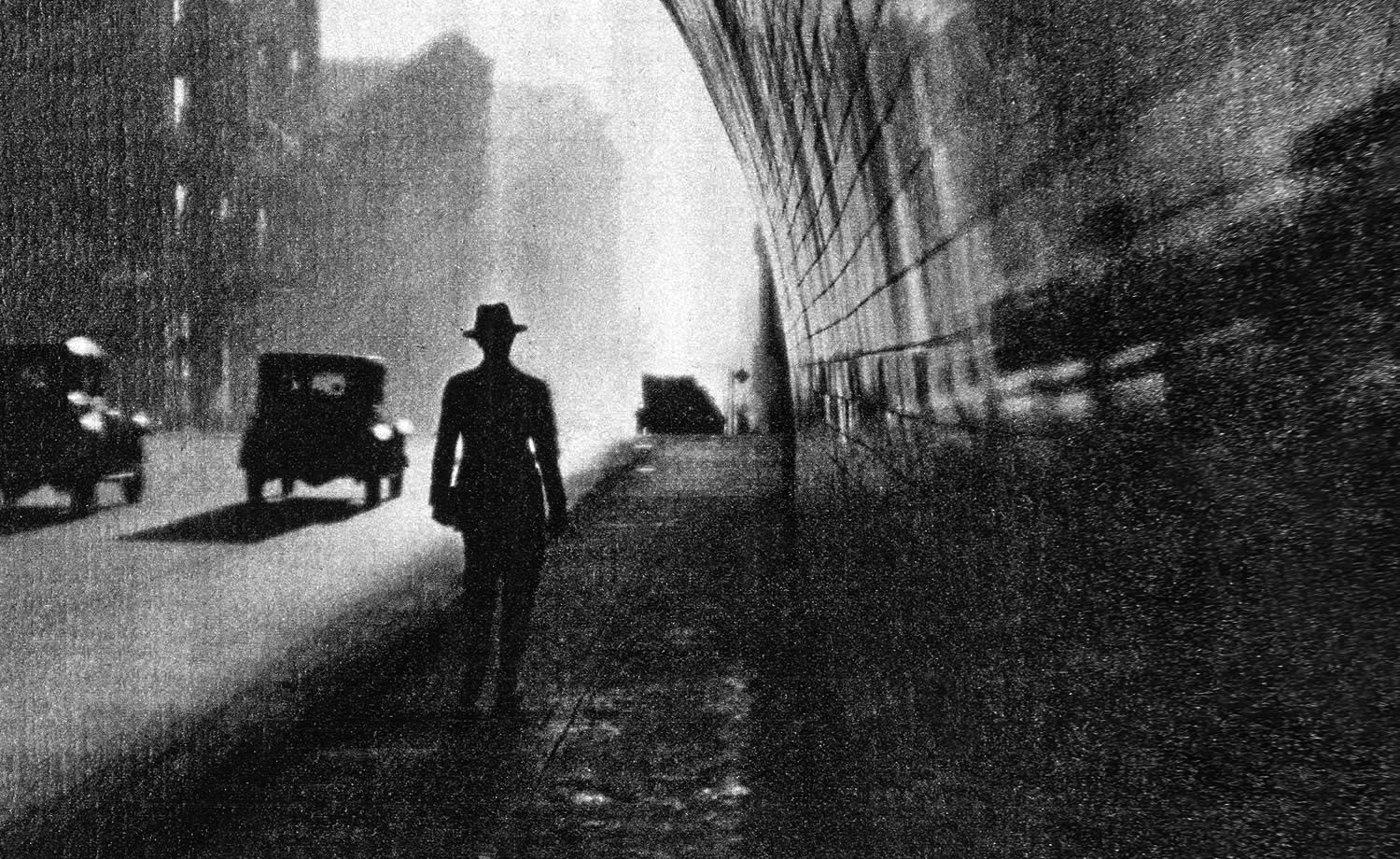
| (1930s)* – Noir-style image of a man in a hat walking through the 2nd Street Tunnel. |
Historical Notes By the 1930s, the tunnel had become part of daily life in downtown Los Angeles. Its long, tiled interior and dramatic lighting made it visually striking, helping it gain a reputation as a moody urban passageway. These qualities later made it popular with photographers and filmmakers. |
 |
|
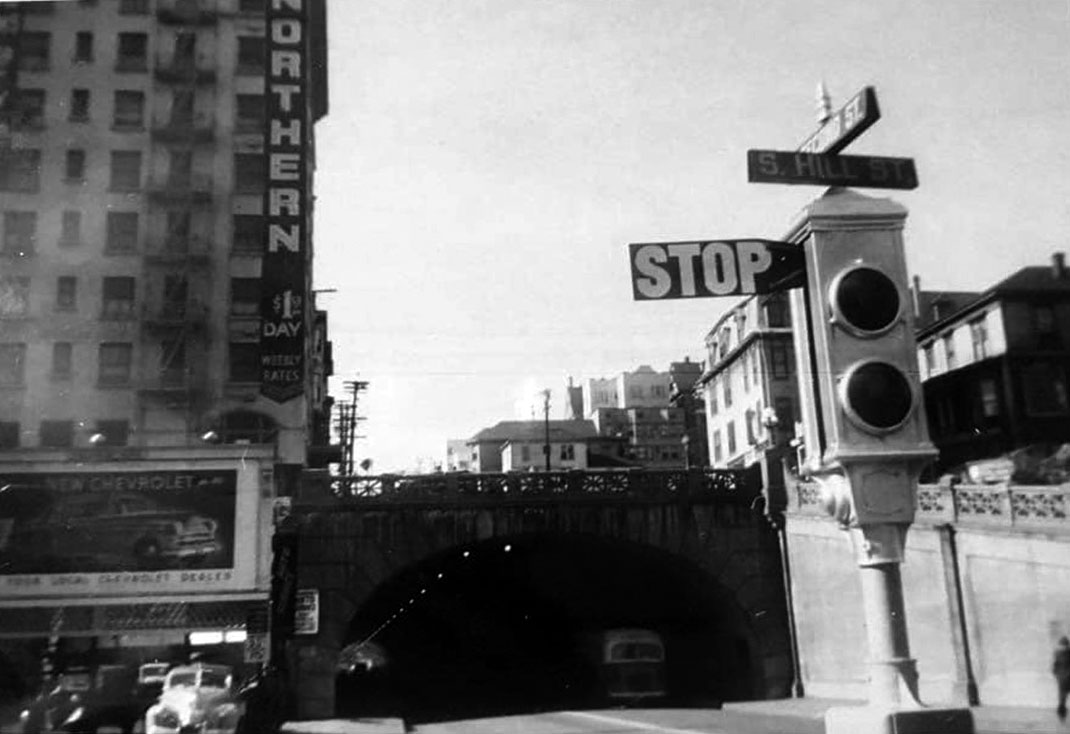
| (1940s)* - View looking toward the 2nd Street Tunnel from Hill Street. An early semaphore traffic signal stands in the foreground. |
Historical Notes This image captures the tunnel during the era when traffic signals were still manually operated or mechanically timed. By the 1940s, automobile traffic had increased dramatically, and the tunnel played a key role in moving cars between the Civic Center and the growing west side of downtown. |
Before and After
 |
|
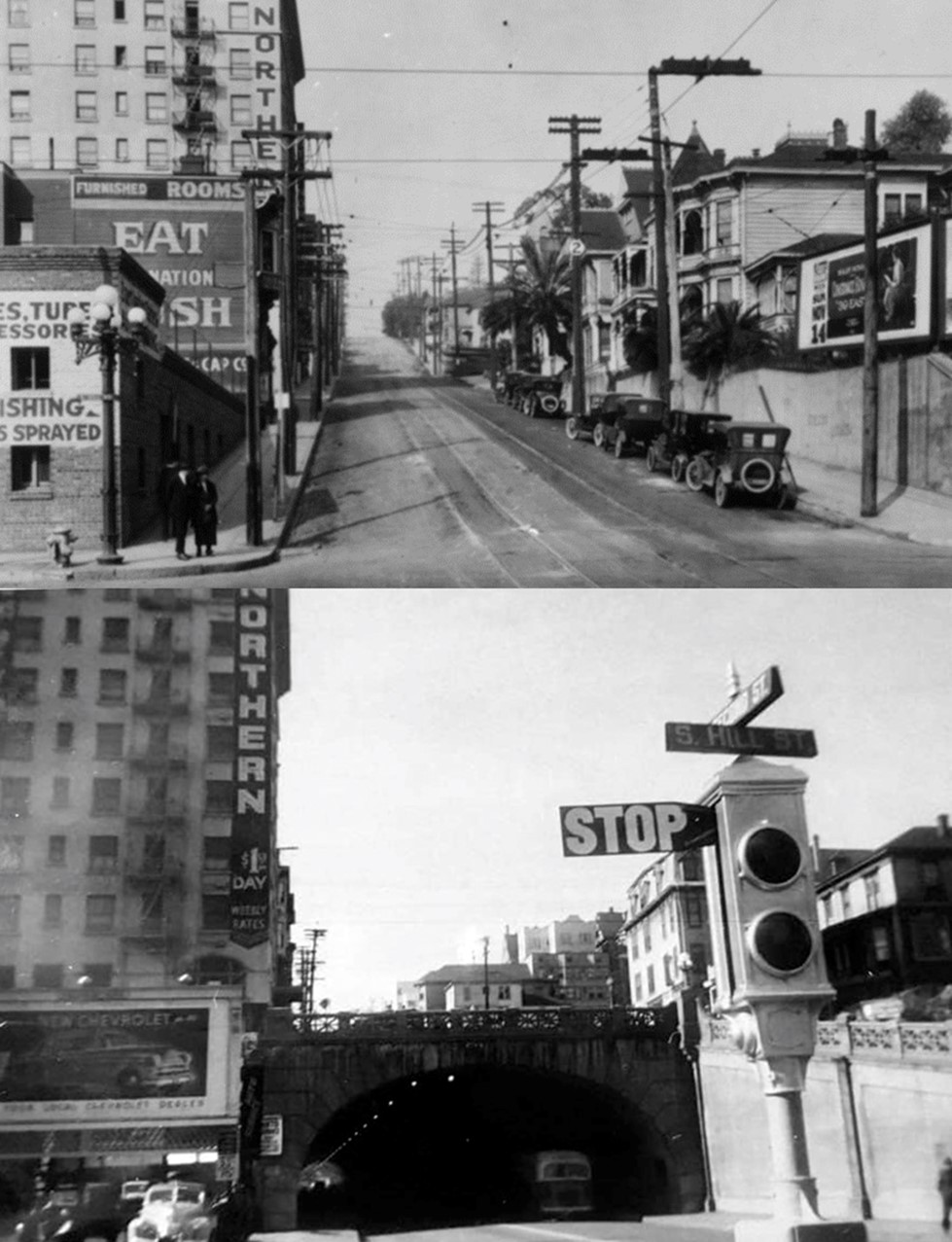
| (1920 vs. 1940)* - View looking west on 2nd Street from Hill Street. Photo comparison by Jack Feldman. |
Historical Notes The comparison shows how quickly the tunnel reshaped movement across Bunker Hill. What had once been a steep and indirect climb became a direct route beneath the hill, changing traffic patterns and encouraging further downtown development. |
 |
|
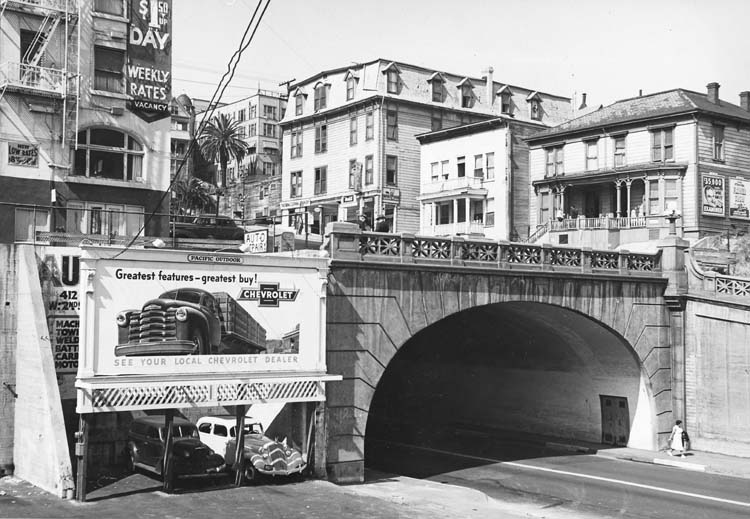
| (1950s)* - Close-up view of the east end of the 2nd Street Tunnel showing the decline of nearby boarding houses and residential hotels. |
Historical Notes By the 1950s, Bunker Hill had entered a period of neglect. Once home to grand Victorian houses and hotels, the neighborhood had become known for aging buildings and low-cost housing. This image captures the area just before large-scale demolition began under urban redevelopment plans. |
 |
|
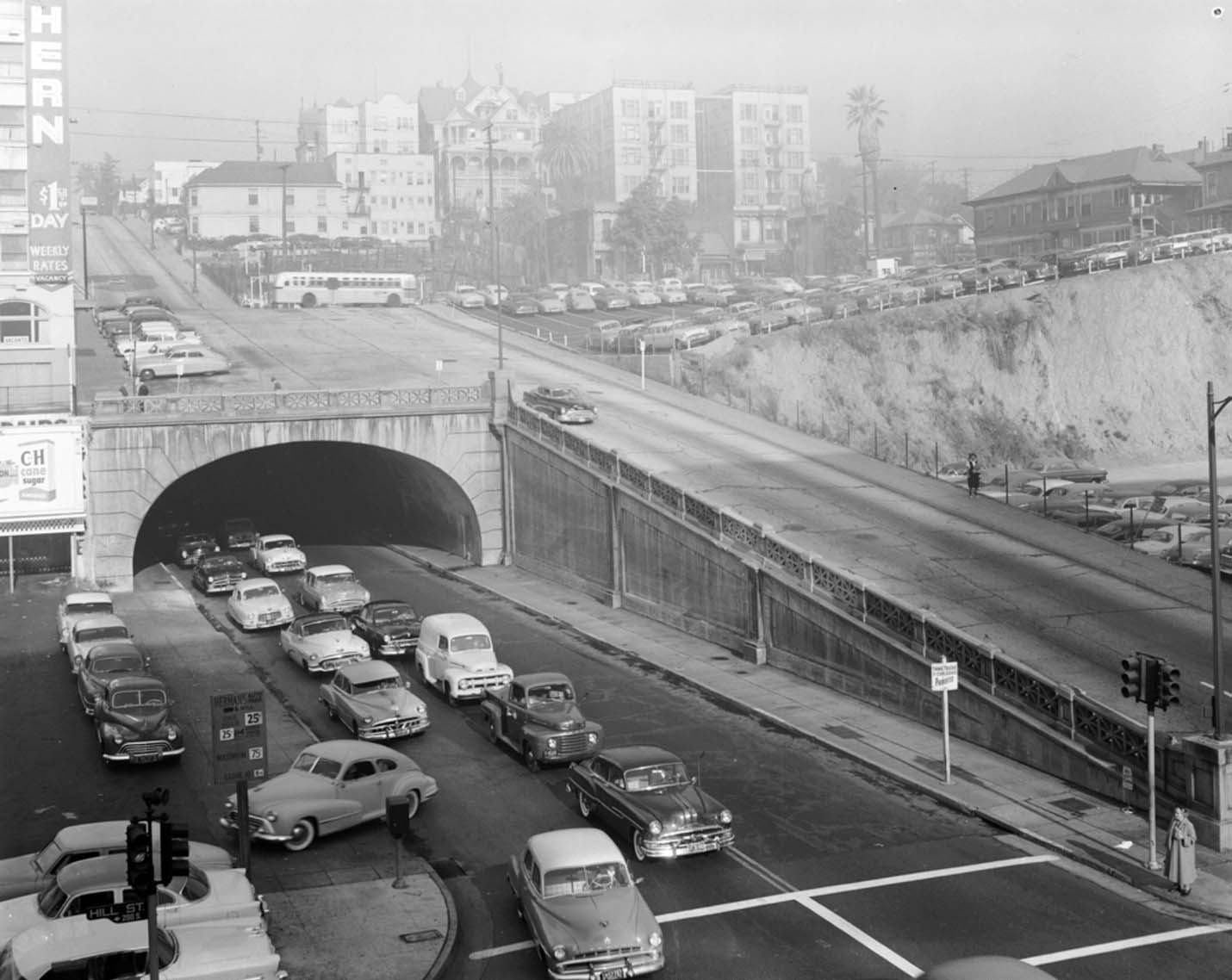
| (1950s)* – View looking at the eastern portal of the 2nd Street Tunnel with cars heading toward the Civic Center. Hill Street is in the foreground. |
Historical Notes Traffic steadily increased after World War II, and the tunnel became a busy commuter route. At the same time, the surrounding neighborhood was being targeted for clearance, signaling the end of old Bunker Hill. |
 |
|
| (1986)* - View looking west from Hill Street toward the 2nd Street Tunnel and Second Street climbing Bunker Hill. Photo by William Reagh. |
Historical Notes By the 1980s, nearly all of historic Bunker Hill had been replaced by modern office towers, apartments, and cultural buildings. The tunnel remained one of the few surviving links to the area’s earlier street layout. |
.jpg) |
|
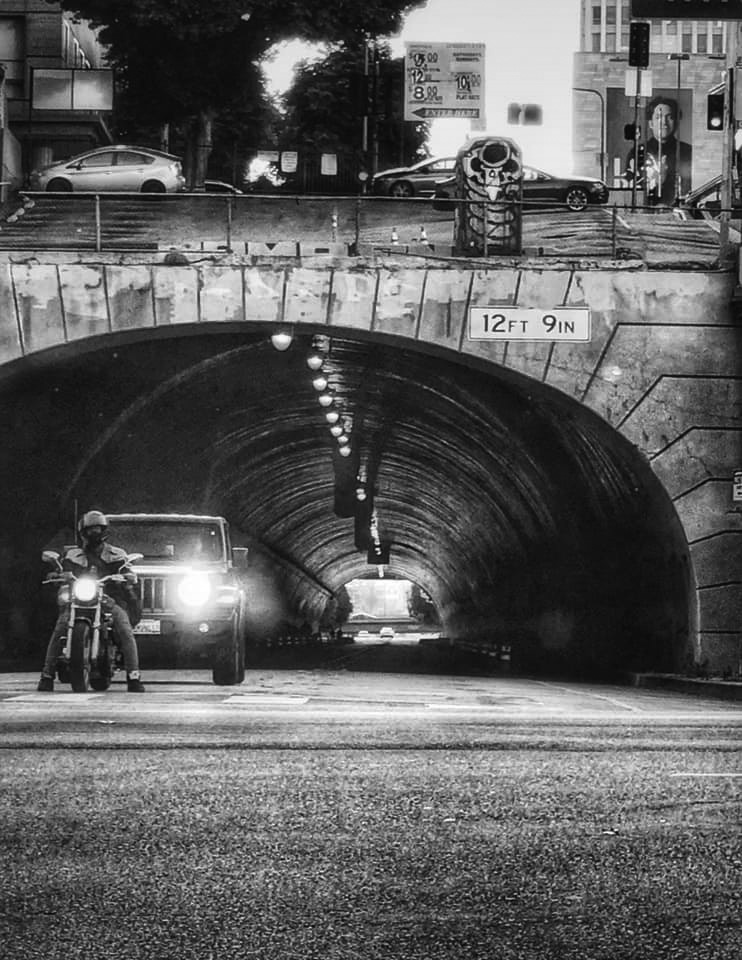
| (2017)* – Google Street View of the eastern portal of the 2nd Street Tunnel from Hill Street. |
Historical Notes The eastern portal remains largely recognizable despite decades of change. Updated lighting, road markings, and nearby development reflect the tunnel’s continued use in a modern downtown setting. |
 |
|
| (2020)* – Eastern portal of the 2nd Street Tunnel. Photo by Carlos G. Lucero. |
Historical Notes Nearly a century after opening, the tunnel continues to serve cars, cyclists, and pedestrians. Its tiled interior and arched entrances remain among the most distinctive pieces of early 20th-century infrastructure in Los Angeles. |
Then and Now
 |
|
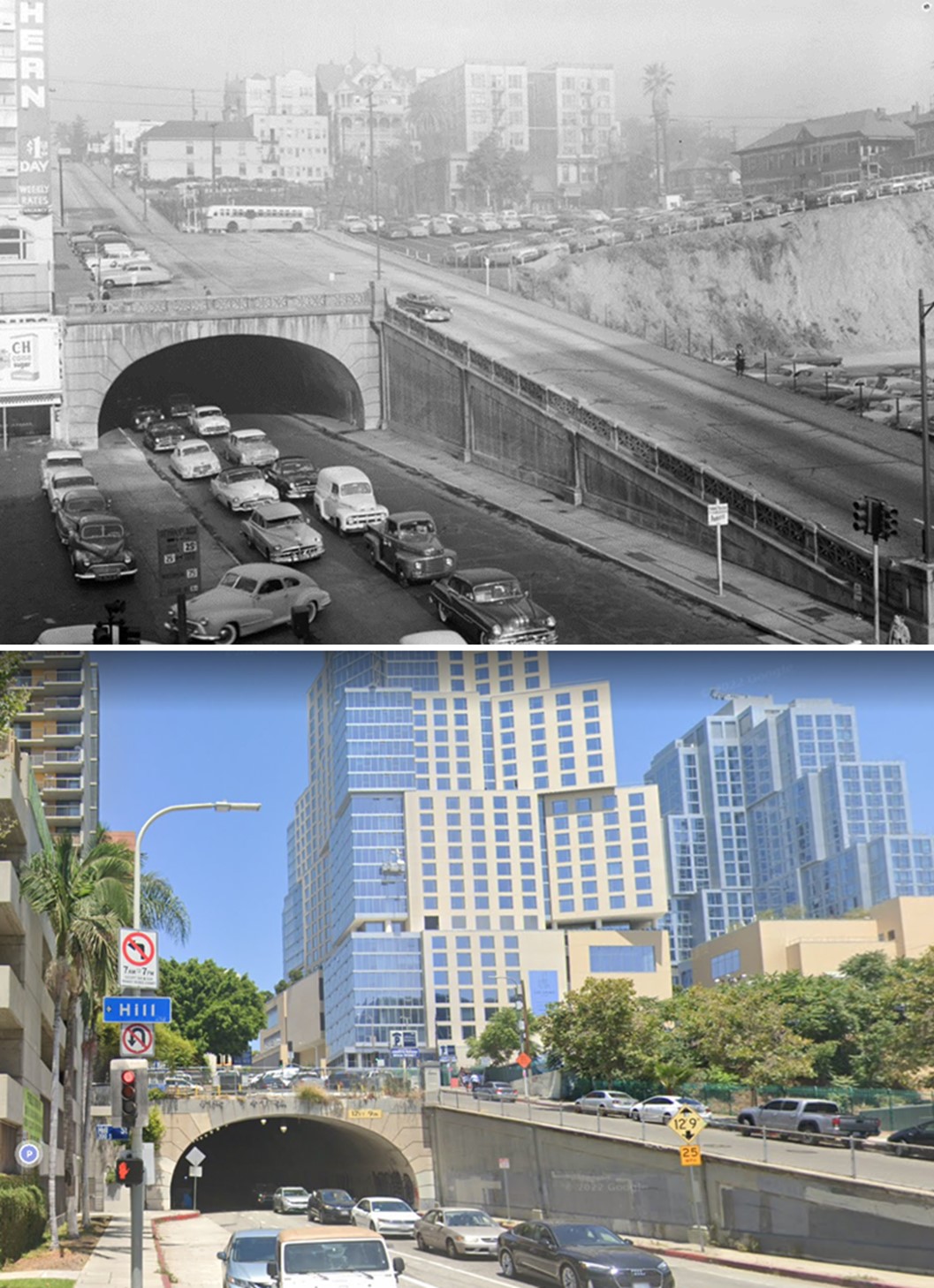
| (1950s vs 2022)* - Looking west on 2nd Street from Hill Street toward Bunker Hill. Photo comparison by Jack Feldman. |
Historical Notes The comparison highlights the complete transformation of Bunker Hill. The once dense neighborhood of hotels and apartments has been replaced by high-rise development, while the tunnel remains as a constant beneath the changes above. |
Then and Now
 |
|
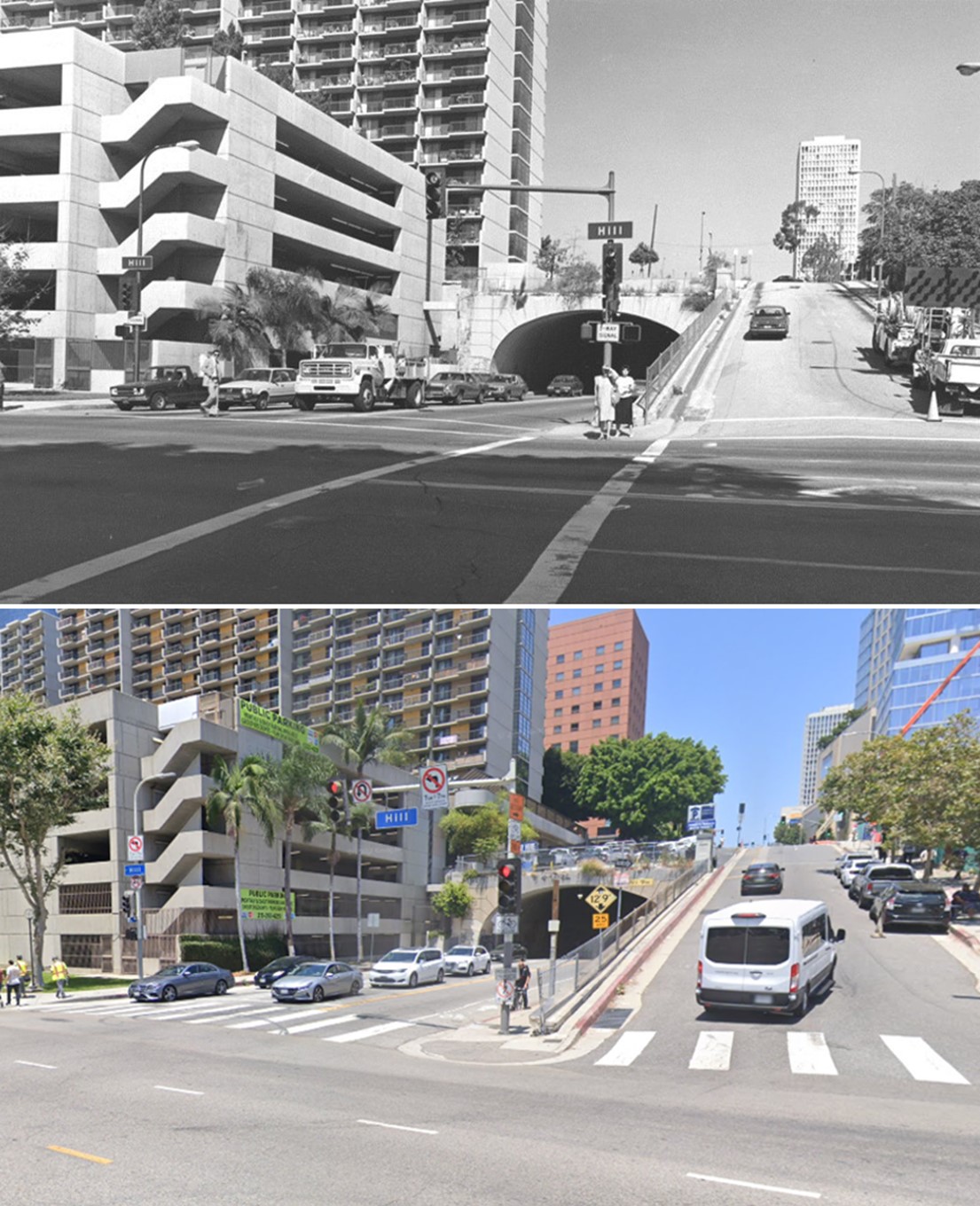
| (1986 vs 2022)* - View looking west from Hill Street toward the 2nd Street Tunnel. Photo comparison by Jack Feldman. |
Historical Notes Despite major redevelopment around it, the tunnel’s basic form has endured. The street above has been reworked several times, but the tunnel continues to function as originally intended. |
Then and Now
 |
|
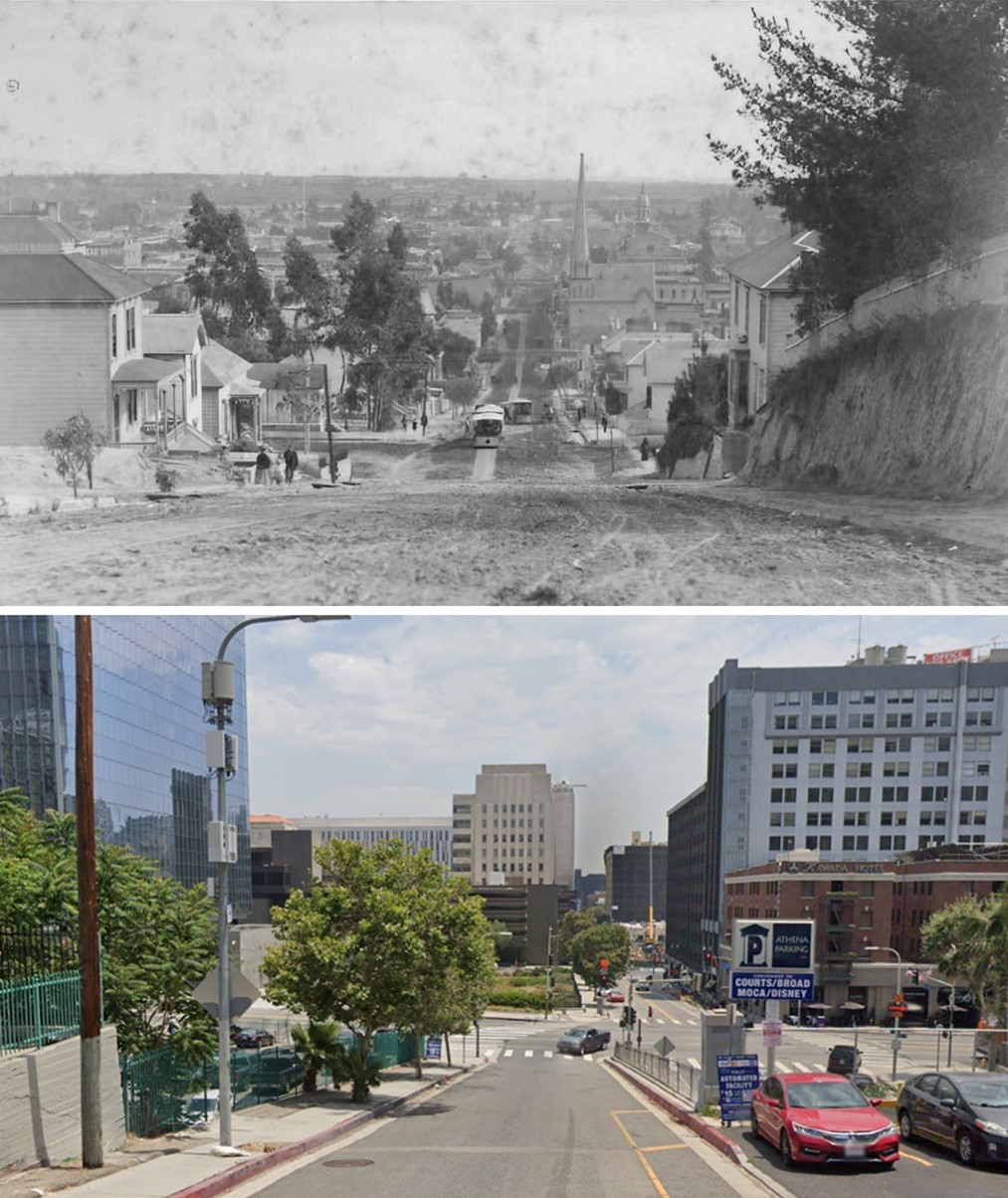
| (1885 vs. 2021)* - Looking east on 2nd Street toward Hill Street. Top photo shows two cable cars of the Second Street Cable Railway that ran over Bunker Hill. When comparing the Then and Now photos note that 2nd Street does not align exactly. That’s because in the 1920s the 2nd Street Tunnel was bored under Bunker Hill. The tunnel is located on the right below the parking lot. |
Historical Notes Before the tunnel, cable cars carried passengers up and over Bunker Hill along Second Street. When the tunnel was bored in the 1920s, the street alignment changed, placing the tunnel slightly south of the original route beneath what is now a parking area. |
* * * * * |
2nd Street Tunnel (Western Portal)
 |
|
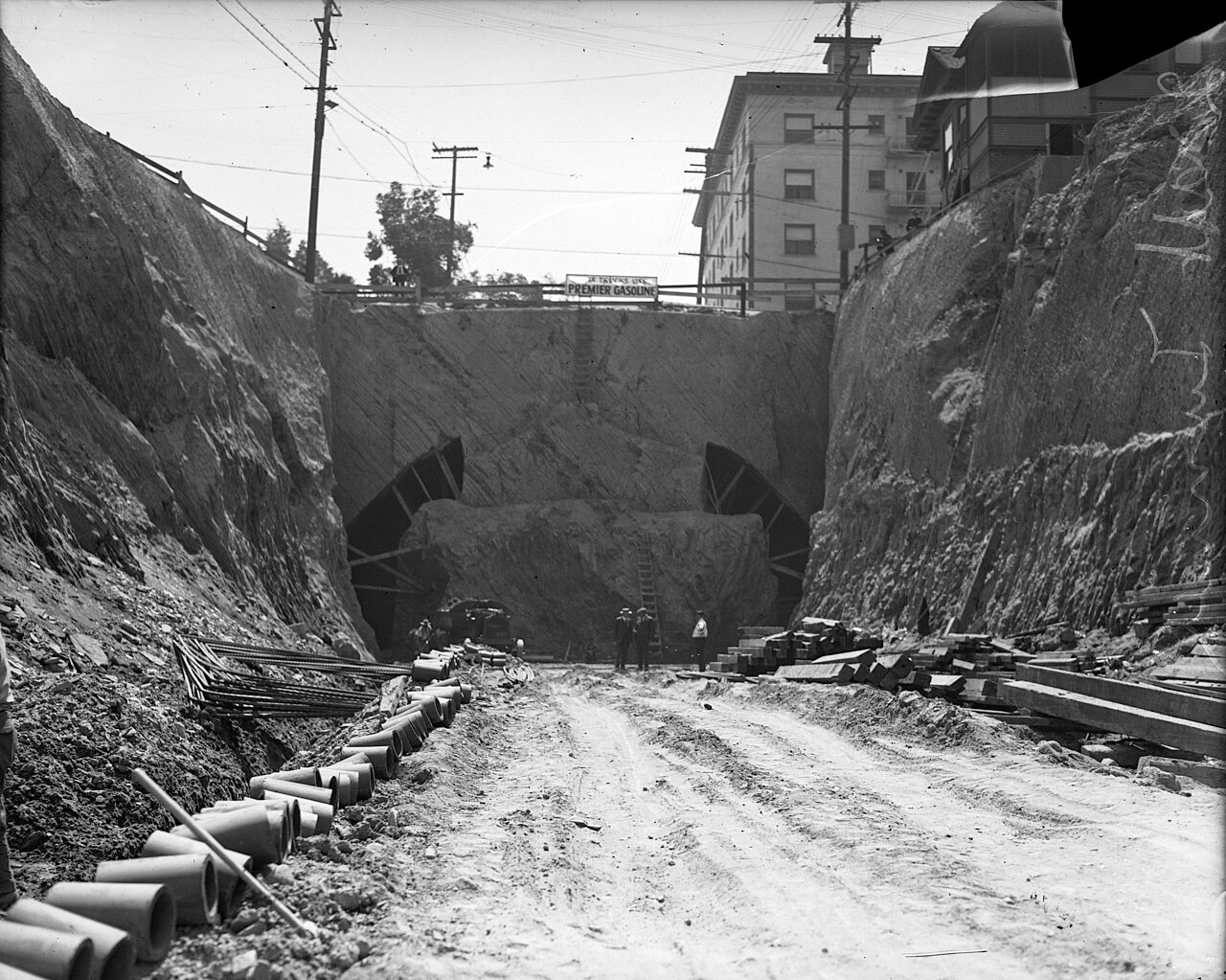
| (1921)* – View of the western side of Bunker Hill before tunnel excavation began. The Stanley Hotel and Apartments appear at upper right. |

Historical Notes The above photo was published in the Aug. 22, 1921, Los Angeles Times with story claiming the tunnel would be finished in less than a year. The tunnel did not open for nearly three years. Construction of the 2nd Street Tunnel began in 1916 but was delayed for several years due to litigation. Work resumed in 1921, with steam shovels tearing into the hillside to bore through Bunker Hill's shale and sandstone. The tunnel was officially opened on July 25, 1924, amid much fanfare. |
 |
|
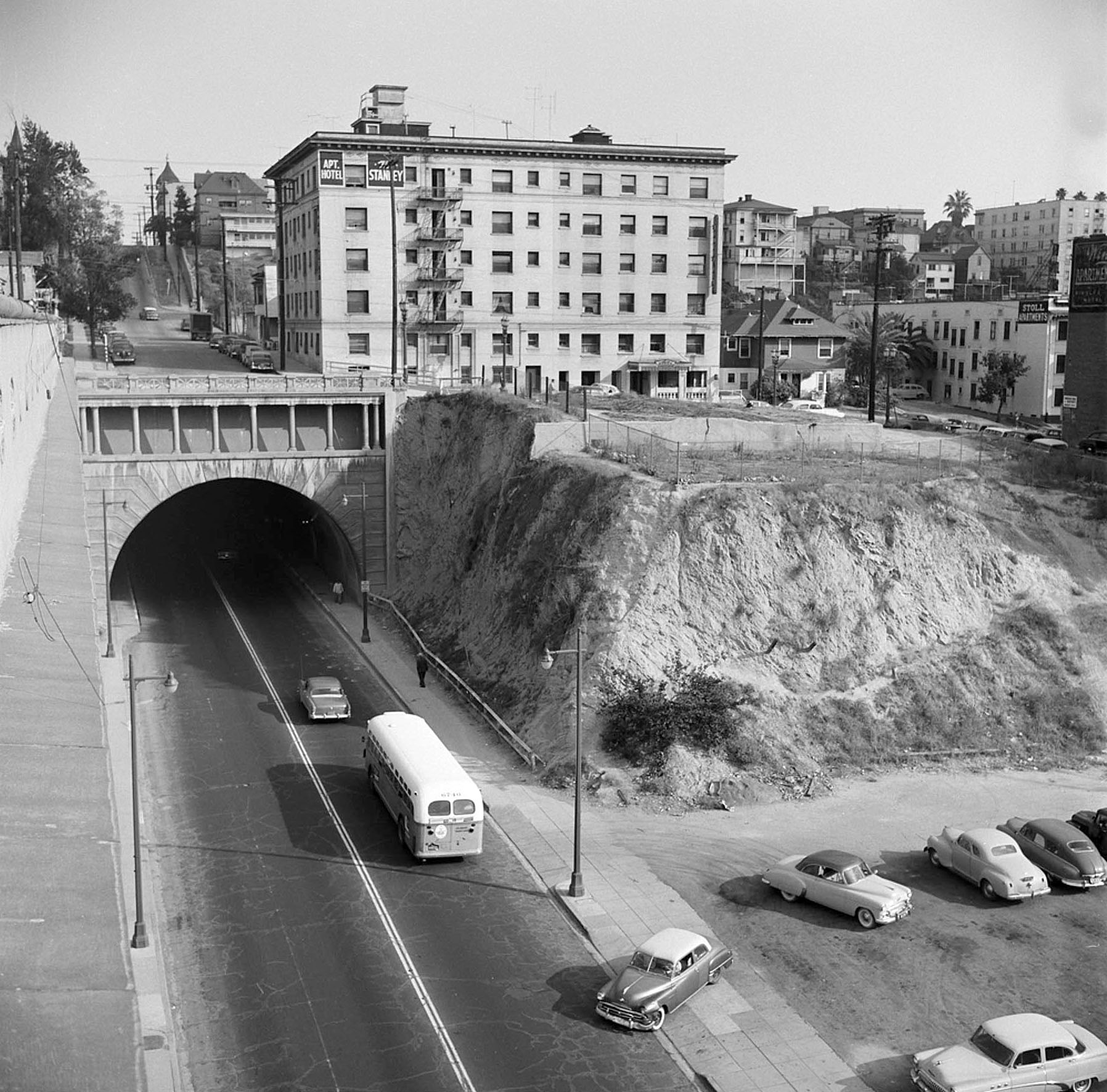
| (1950s)* - View looking east toward the west end of the 2nd Street Tunnel. The Stanley Hotel and Apartments stand above the tunnel, with the Dome Hotel visible in the distance. |
Historical Notes By the 1950s, many of the buildings surrounding the tunnel were aging and overcrowded. The Stanley Hotel and Dome Hotel were among the last reminders of Bunker Hill’s residential past before demolition began. |
 |
|
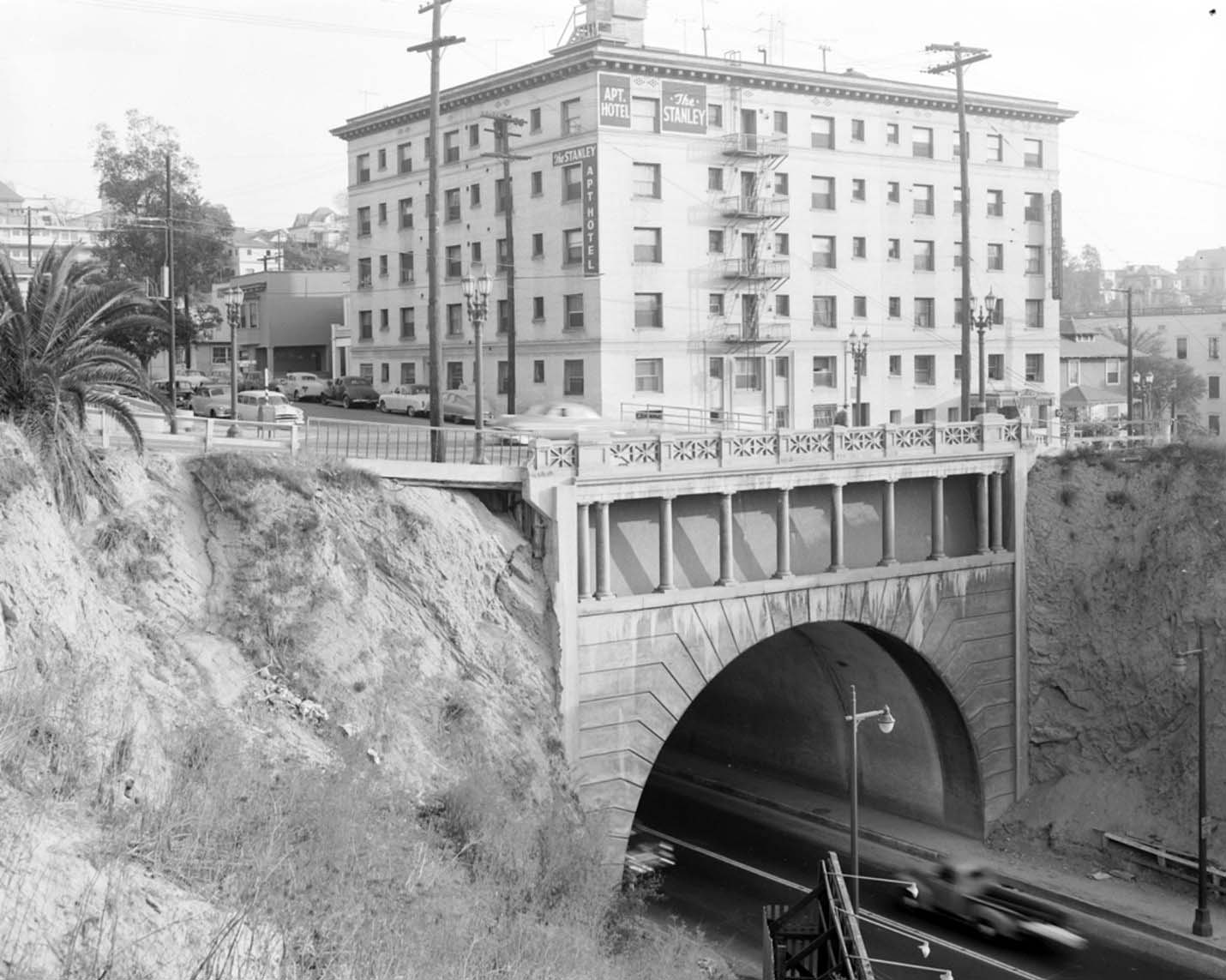
| (1950s)* – Close-up view of the western portal of the 2nd Street Tunnel with the Stanley Hotel above. |
Historical Notes The Stanley Hotel and Apartments were demolished in the 1960s as part of the Bunker Hill redevelopment project. Their removal marked the final break from the neighborhood’s earlier residential character. |
 |
|
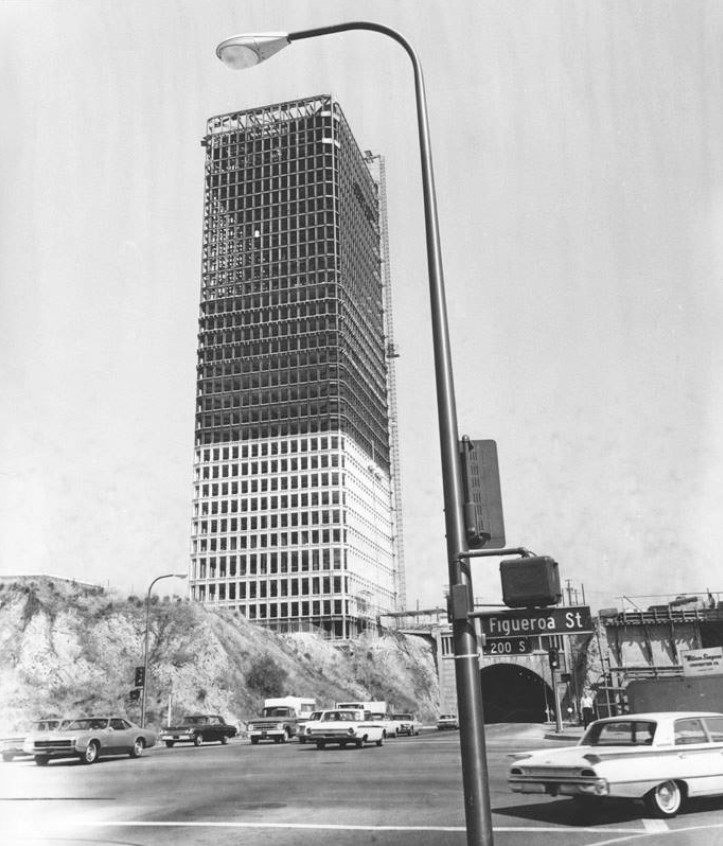
| (1968)* – View looking east toward the west end of the tunnel from Figueroa Street. Bunker HIll Tower rises nearby. |
Historical Notes The completion of Bunker HIll Tower symbolized the new direction of the area. Modern office buildings replaced the former hillside community, while the tunnel continued to carry traffic beneath the rebuilt landscape. |
 |
|
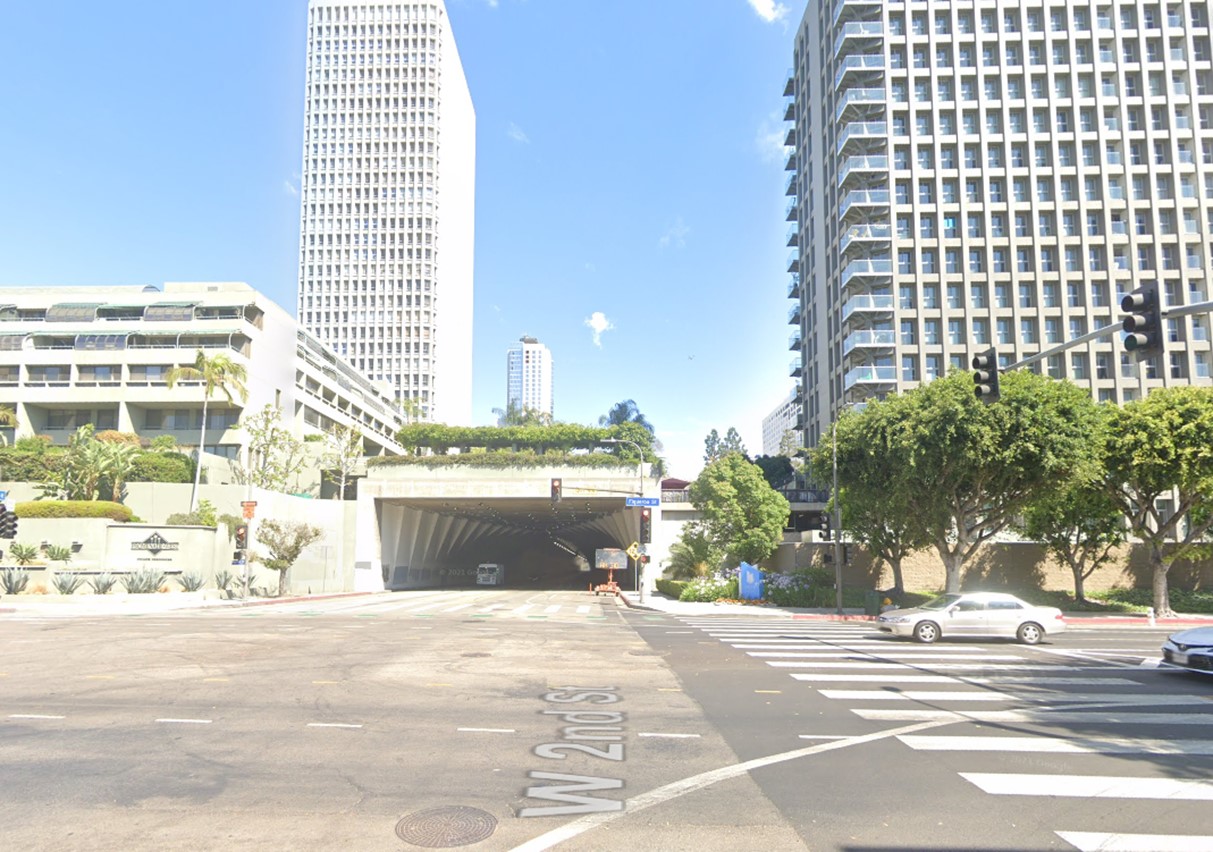
| (2021)* – Contemporary view of the western portal after extension and lighting upgrades. |
Historical Notes The western portal has been extended closer to Figueroa Street to improve visibility and safety. Updated lighting and roadway design reflect changing transportation needs, including accommodations for bicycles. |
Then and Now
 |
|
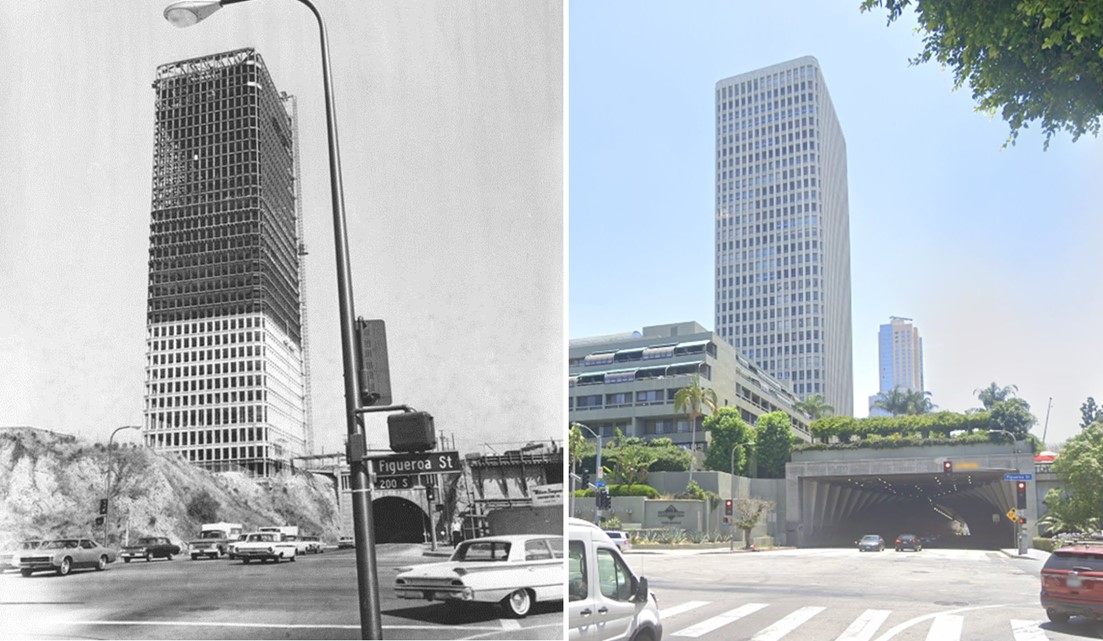
| (1968 vs 2022)* – Looking east toward the west portal of the 2nd Street Tunnel as seen from Figueroa Street with Bunker Hill Tower seen in the background. Note how much the tunnel was extended closer to Figueroa. The 1982-built Promenade West Condos stand on the NE corner. Photo comparison by Jack Feldman. |
Historical Notes The comparison shows how the tunnel entrance has moved outward as streets were widened and buildings replaced. While the surroundings have changed, the tunnel remains an essential downtown connector. |
 |
|
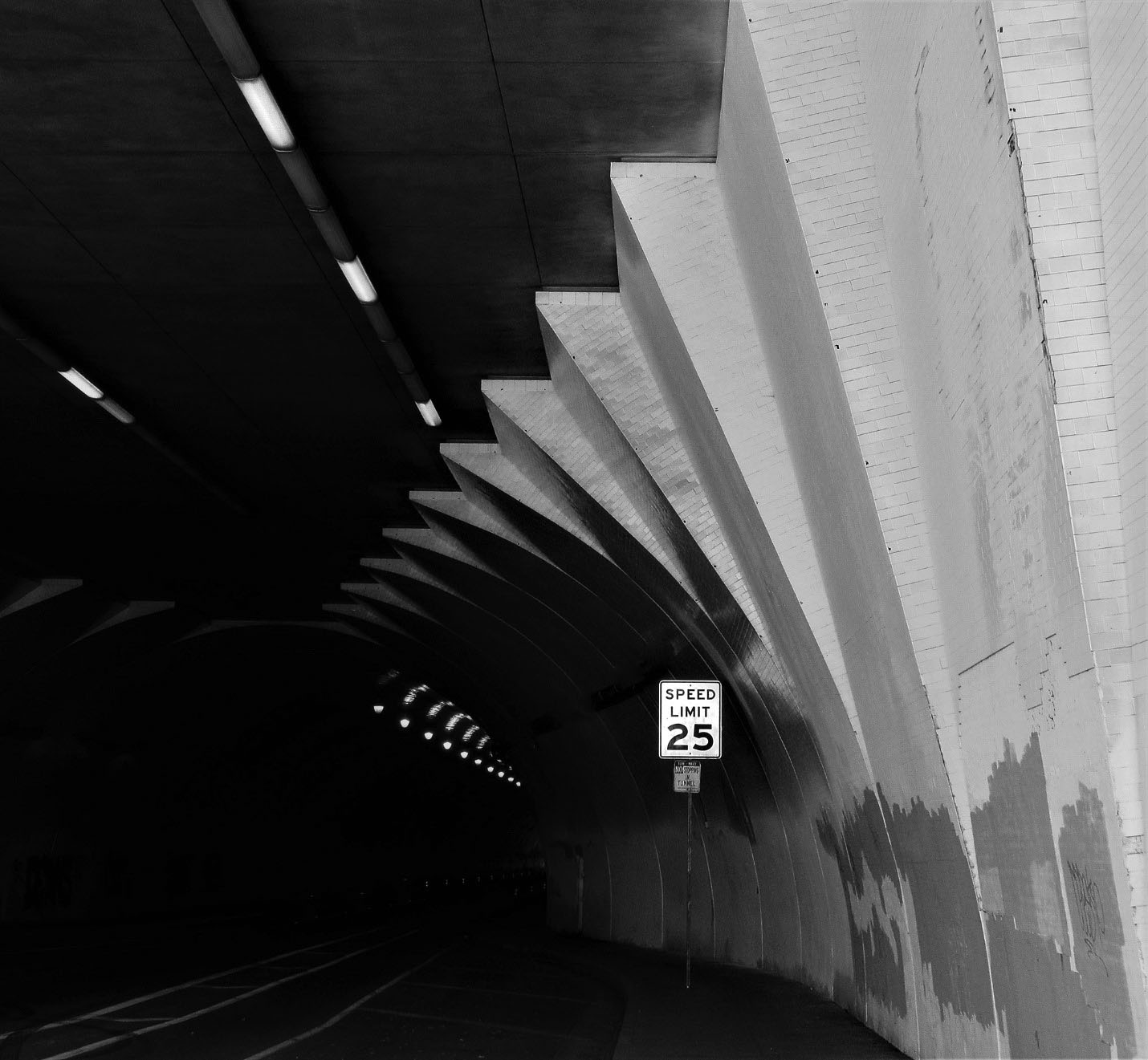
| (2020)* - “Time tunnel to the future.” Photo by Howard Gray. |
Historical Notes The tunnel’s strong sense of depth and motion has made it a favorite subject for photographers. Its long curve and repeating lights create a dramatic sense of movement. |
 |
|
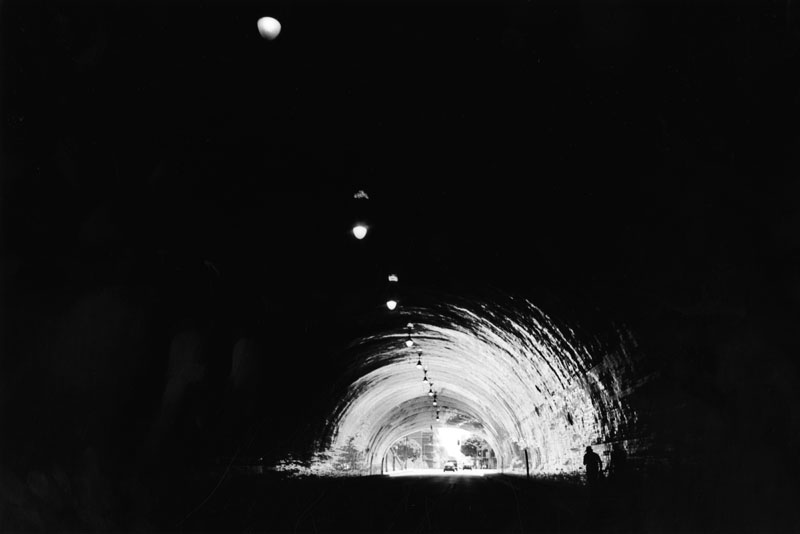
| (2000)* - As if straight out of a science fiction movie, cars seem to spill out of the darkness and into the spiral-like light of day. The photo was taken from inside the 2nd Street Tunnel, two pedestrians walking on the right side, and a row of ceiling lights that are spaced out through the entire tunnel are the only visible things inside this black hole. |
Historical Notes The tunnel has appeared in dozens of films, television shows, and commercials. Its futuristic look helped make it famous as a filming location, most notably in science fiction and noir-style productions. Despite its cinematic fame, it continues to function as an everyday piece of city infrastructure. |
* * * * * |
|
Other Sections of Interest |
|
Water and Power in Early LA |
|
Newest Additions |
New Search Index |

A new SEARCH INDEX has been added to help navigate through the thousands of topics and images found in our collection. Try it out for a test run.
Click HERE for Search Index |
* * * * * |
< Back