Club Casa del Mar (Casa del Mar Hotel)
Rising along Santa Monica’s shoreline in 1926, Club Casa del Mar became one of the most luxurious and recognizable beach clubs in Southern California. Built during the height of the region’s coastal resort boom, the grand Italian Renaissance Revival structure embodied the glamour, leisure, and optimism associated with Southern California during the Roaring Twenties.Over the decades, the massive oceanfront building underwent a remarkable series of transformations. Originally developed as an exclusive private beach club catering to wealthy Angelenos and Hollywood celebrities, it later served as a military rehabilitation center during World War II, became headquarters for the controversial Synanon organization in the 1960s, and was eventually converted into the nationally known Pritikin Longevity Center.After years of decline and vacancy, the historic structure was carefully restored and reopened in 1999 as the luxury Casa del Mar Hotel. Today, it remains one of the finest surviving examples of Southern California’s grand beach resort era and an enduring landmark along the Santa Monica coastline. |
 |
|
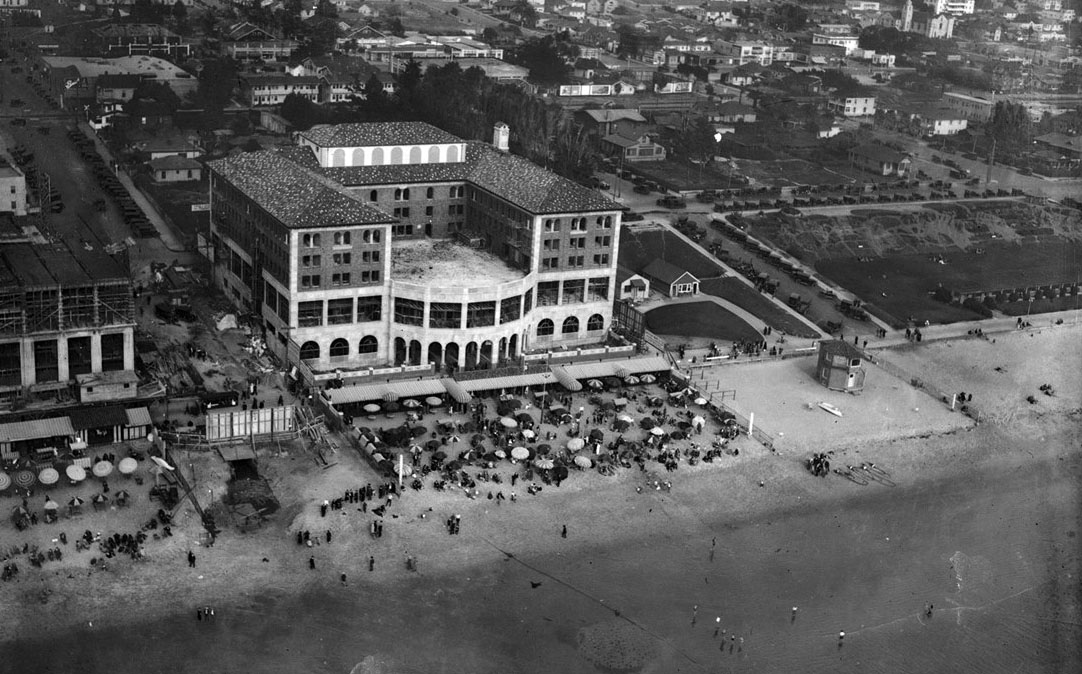
| (1926)* - Aerial view looking east showing the beach and Club Casa del Mar in Santa Monica. Construction of the Edgewater Club can be seen at left edge of image, north of Pico Boulevard. Huntington Library |
| Historical Notes
Club Casa del Mar opened in 1926 at the foot of Pico Boulevard during the height of Southern California’s booming beach resort era. Built by brothers E.A. “Jack” Harter and T.D. “Til” Harter through the H & H Holding Company at a reported cost of $2 million, the massive seaside complex quickly became one of the most prestigious private beach clubs on the Pacific Coast. Designed by Los Angeles architect Charles F. Plummer in the Italian Renaissance Revival style, the seven story structure combined luxury accommodations, dining rooms, athletic facilities, ballrooms, and oceanfront recreation into a single destination that catered to affluent Angelenos drawn to the growing glamour of Santa Monica’s coastline. |
 |
|
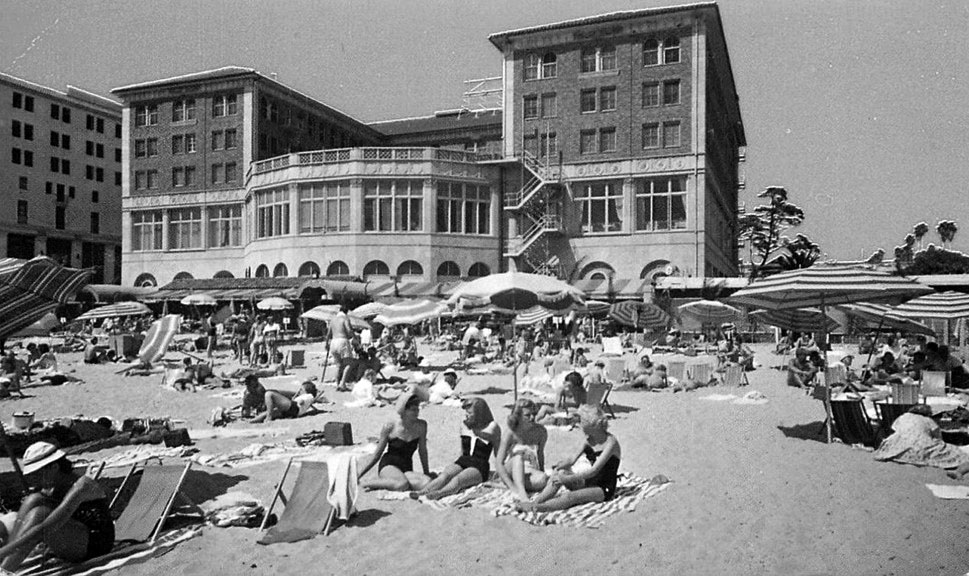
| (1926)* - Sunbathers relax in front of Club Casa del Mar in Santa Monica. |
| Historical Notes
When Club Casa del Mar opened in 1926, it quickly became one of the most luxurious beach resorts in Southern California. Charging annual dues of $10, the club offered premier amenities of the era including swimming pools, recreation rooms, dining facilities, and elegant ballrooms. Membership rapidly expanded, with the club reportedly maintaining approximately 2,000 member accounts during its peak years. Hollywood celebrities including Clark Gable, Greta Garbo, and composer Rudolf Friml were among its well known patrons. The club also developed a reputation for its lively social atmosphere during the Prohibition era. Gambling, horse betting, slot machines, and hidden speakeasies became part of the club’s allure, reflecting the free spirited coastal culture that flourished in Southern California during the 1920s. |
 |
|
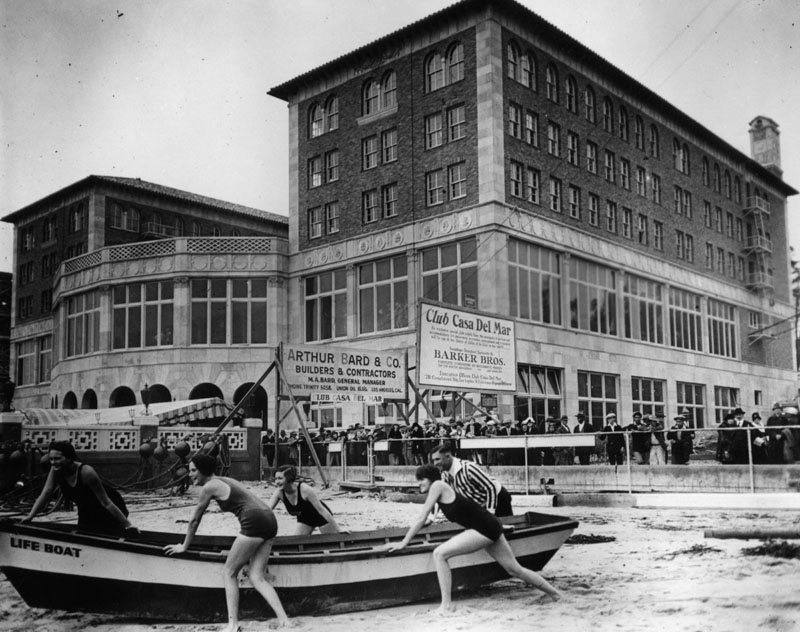
| (ca. 1926)* - Life boat drill with male and female lifeguards outside the new Club Casa del Mar, a private beach club at 1901 Promenade, Santa Monica. |
| Historical Notes
Lifeguard services along Southern California beaches expanded rapidly during the early twentieth century as public interest in ocean recreation continued to grow. Prior to regional consolidation in the 1970s, many coastal communities operated their own independent beach patrols and rescue units. The increasing popularity of Santa Monica’s beaches during the 1920s helped establish professional lifeguarding as an essential public safety service, eventually leading to the formation of the Los Angeles County Lifeguard Division, today recognized as the world’s largest professional lifeguard organization. |
 |
|
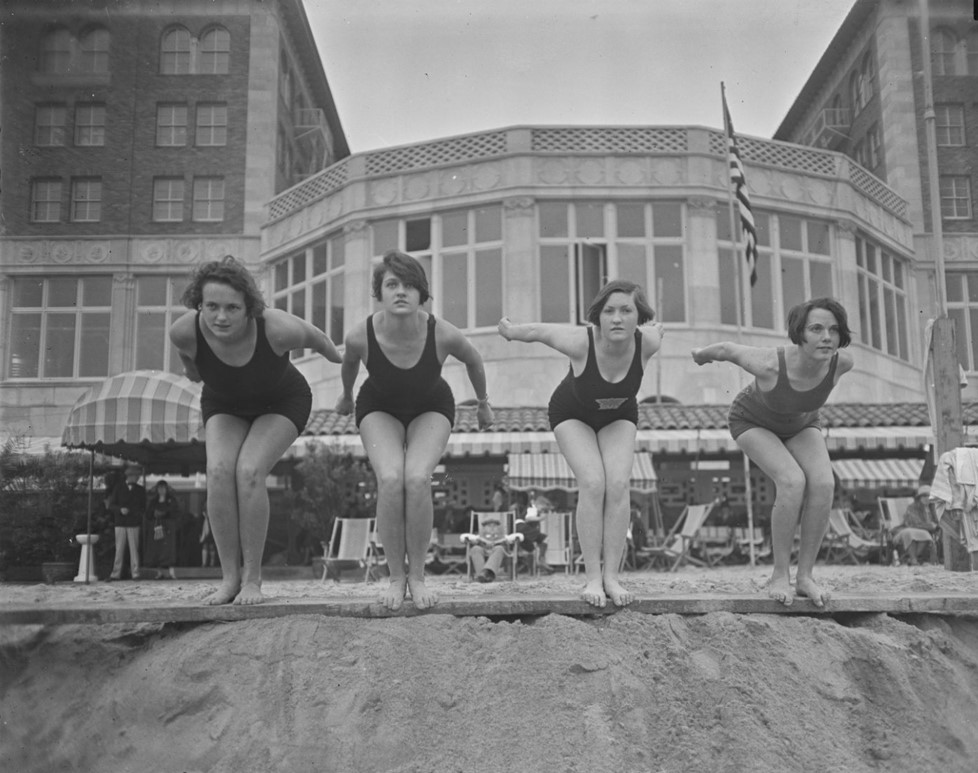
| (ca. 1926)* - Image of four women from the Club Casa del Mar swim team, in swimsuits and diving poses, in front of Club Casa del Mar, Santa Monica. Photo from the Ernest Marquez Collection. |
| Historical Notes
The 1920s marked a major turning point in women’s swimwear as swimming and beach recreation became increasingly popular throughout the United States. Earlier restrictive bathing costumes gradually gave way to more practical one piece suits made from wool knit and ribbed jersey fabrics that allowed greater comfort and freedom of movement. The changing styles also reflected broader social changes taking place during the decade. Shorter hemlines, sleeveless designs, and more form fitting swimwear challenged earlier standards of modesty and occasionally sparked controversy at public beaches. By the mid 1920s, however, evolving attitudes toward recreation, athletics, and women’s independence helped make the new styles widely accepted. |
 |
|
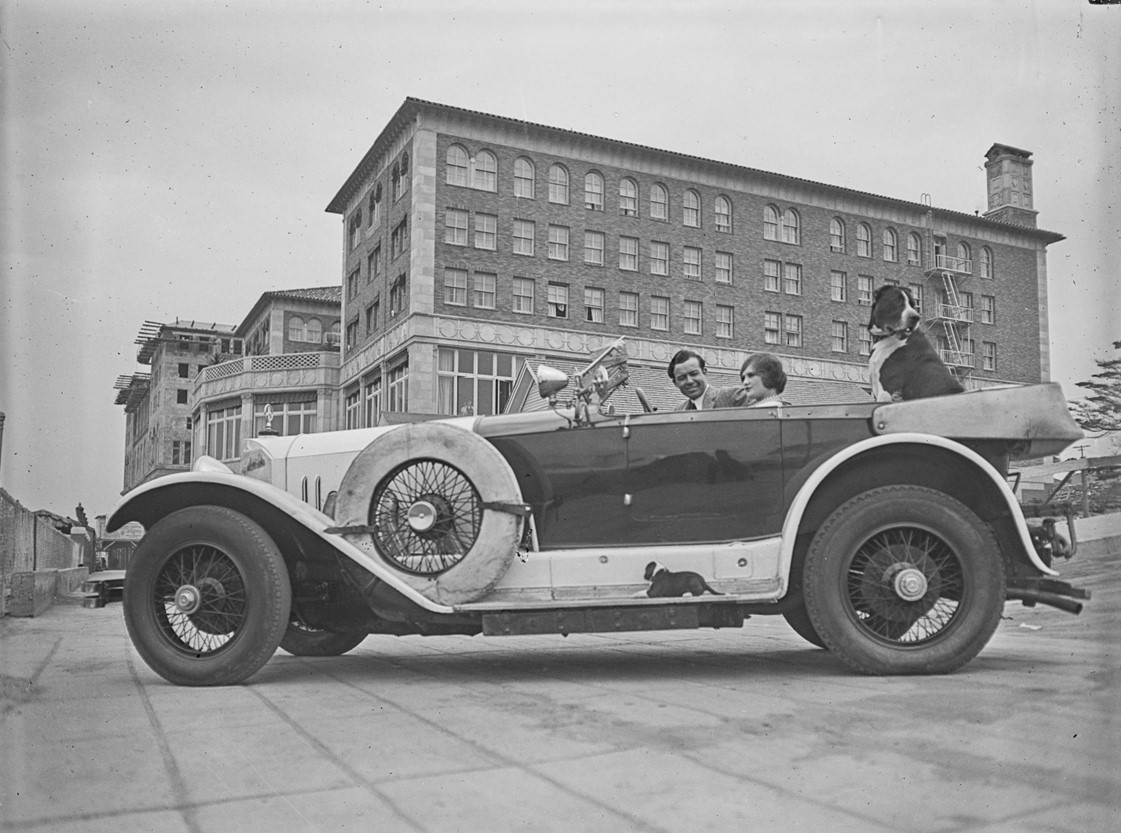
| (1926)* - Image of actor and architect Jack Donovan, a woman, and a dog seated in a Mercedes in front of Club Casa del Mar, Santa Monica, California. A puppy sits on the running board, while the Edgewater Club, still under construction, is visible in the background. Photo from the Ernest Marquez Collection. |
| Historical Notes
Actor and architect Jack Donovan was a colorful figure in Los Angeles during the silent film era, known for both his screen appearances and his dramatic architectural designs. Although he was not directly involved in the development of Club Casa del Mar, his presence in this image reflects the close connection between Hollywood culture and Santa Monica’s growing beach resort scene during the 1920s. The luxurious automobiles, fashionable attire, and elegant coastal backdrop seen here capture the optimism and glamour associated with Southern California’s expanding seaside communities during the Roaring Twenties. |
 |
|
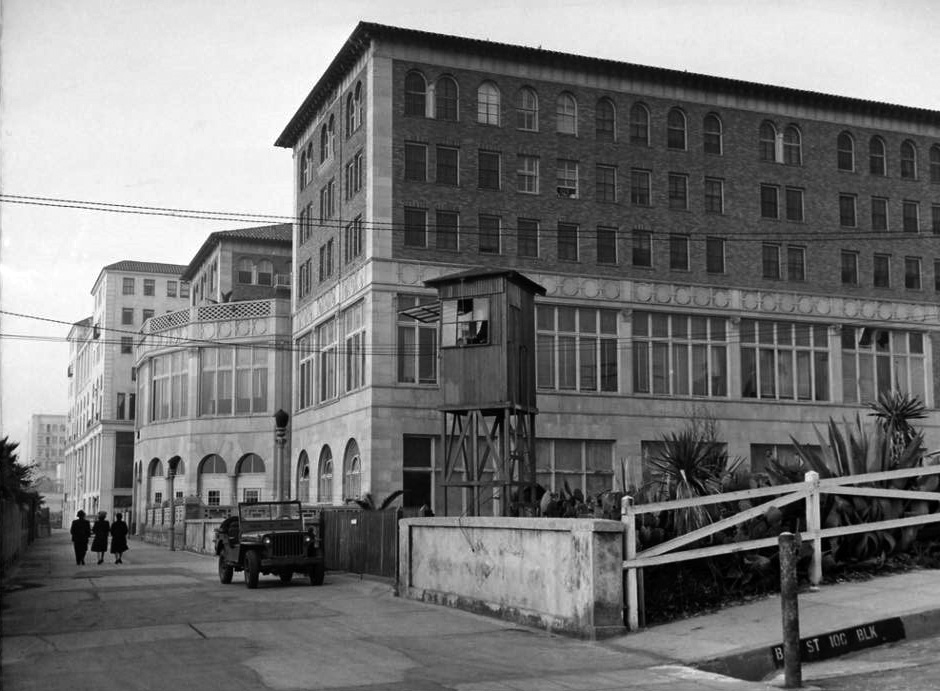
| (1945)* – View showing Club Casa del Mar when it was used as a US Army rest and rehabilitation center. |
| Historical Notes
Like many prominent coastal properties during World War II, Club Casa del Mar was repurposed for military use as the nation shifted from leisure and tourism to wartime mobilization. During the war years, the building was commandeered by the US Army and utilized as a rest and rehabilitation center for military personnel stationed throughout the region. The wartime conversion marked a dramatic transition for the once glamorous private beach club, reflecting the broader transformation of Southern California’s coastline during the war effort. |
 |
|
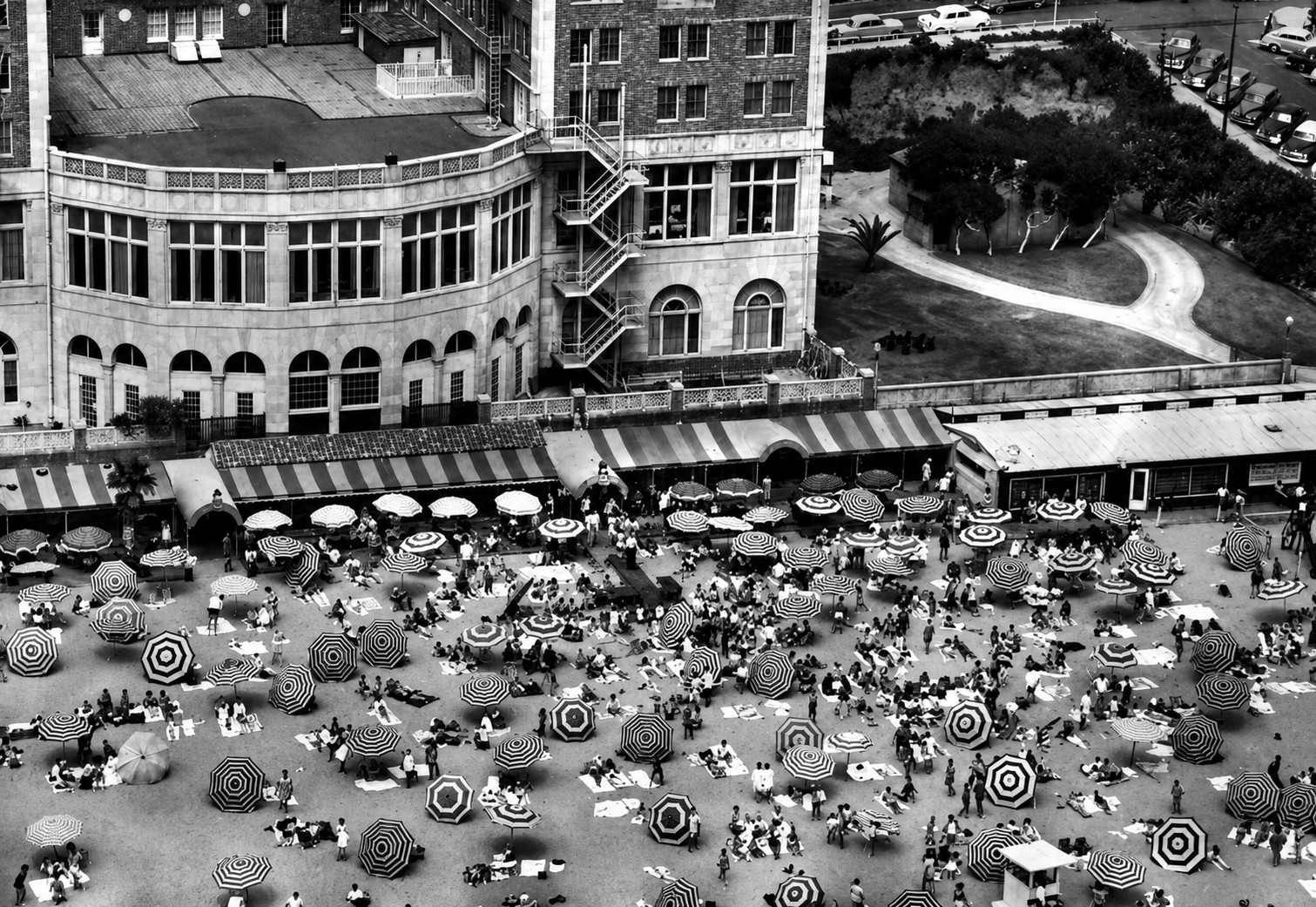
| (1953)* - View of the beach in front of the Club Casa del Mar. A variety of umbrella designs cover the beach. |
| Historical Notes
Following World War II, Santa Monica’s beaches remained among the most popular recreational destinations in Southern California. Expansive stretches of sand lined with colorful umbrellas, bathhouses, and beach clubs became enduring symbols of the region’s coastal lifestyle during the 1950s. By 1960, Club Casa del Mar had closed its doors as changing economics and tourism patterns reshaped Santa Monica’s beachfront. In 1967, Charles E. Dederich relocated Synanon’s headquarters to the building, transforming the former resort into the center of the controversial drug rehabilitation organization. In 1978, Nathan Pritikin converted the property into the Pritikin Longevity Center, a nationally known nutrition and health care facility that operated there until 1997. |
Then and Now
 |
|
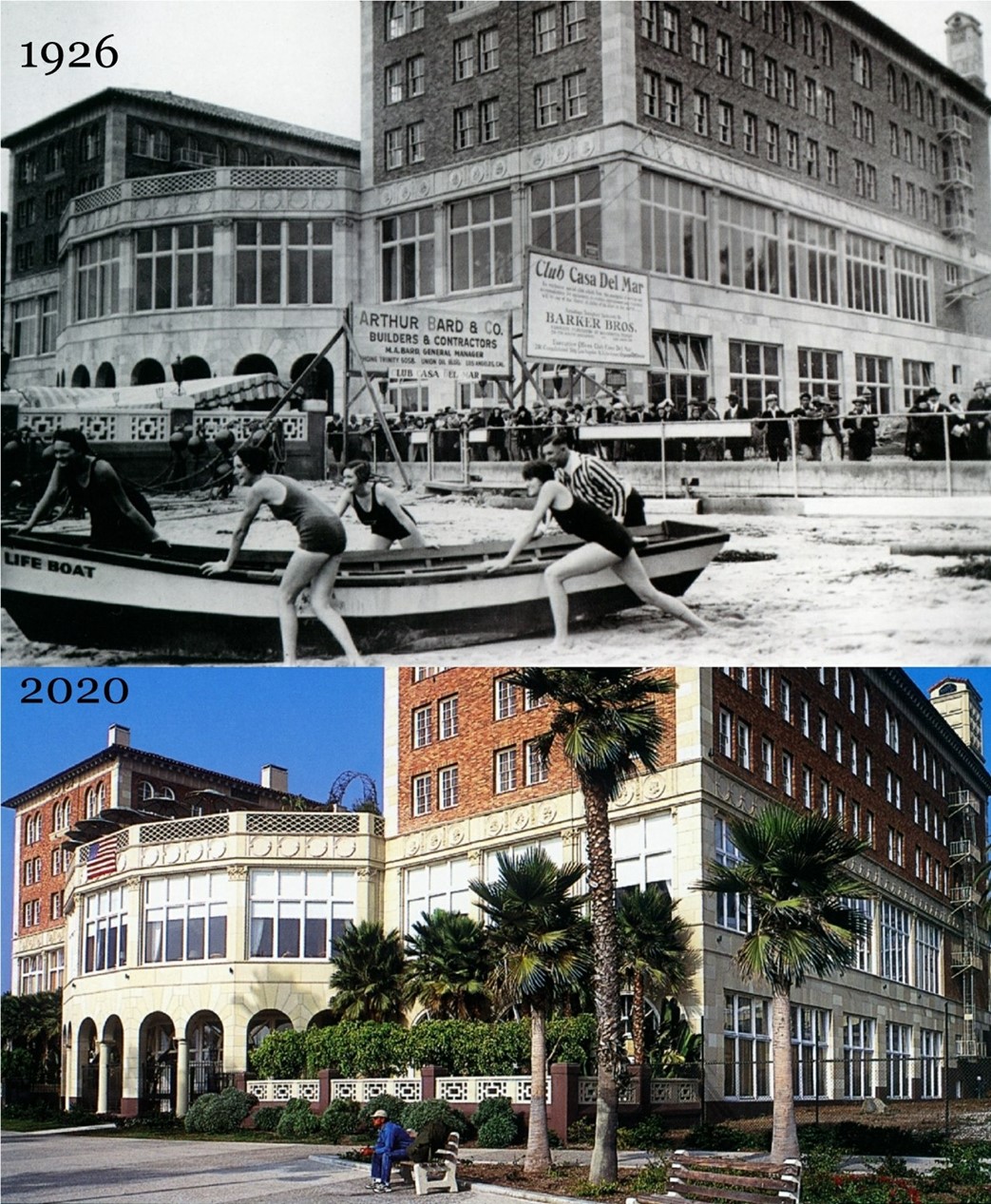
| Then and Now – Photo Courtesy of Augie Castagnola* |
| Historical Notes
The “Then and Now” comparison highlights nearly a century of change along Santa Monica’s shoreline while demonstrating the remarkable survival of Club Casa del Mar through multiple eras of Southern California history. Despite decades of changing ownership, wartime use, economic decline, and redevelopment pressures along the coast, the massive oceanfront structure has remained one of the defining landmarks of Santa Monica Beach since the 1920s. The surrounding beachfront evolved dramatically over the twentieth century as private beach clubs gradually disappeared, public recreation expanded, and high rise hotels and residential development reshaped the coastline. Through restoration and adaptive reuse, Casa del Mar ultimately survived as one of the last great reminders of Santa Monica’s grand beach resort era. |
 |
|
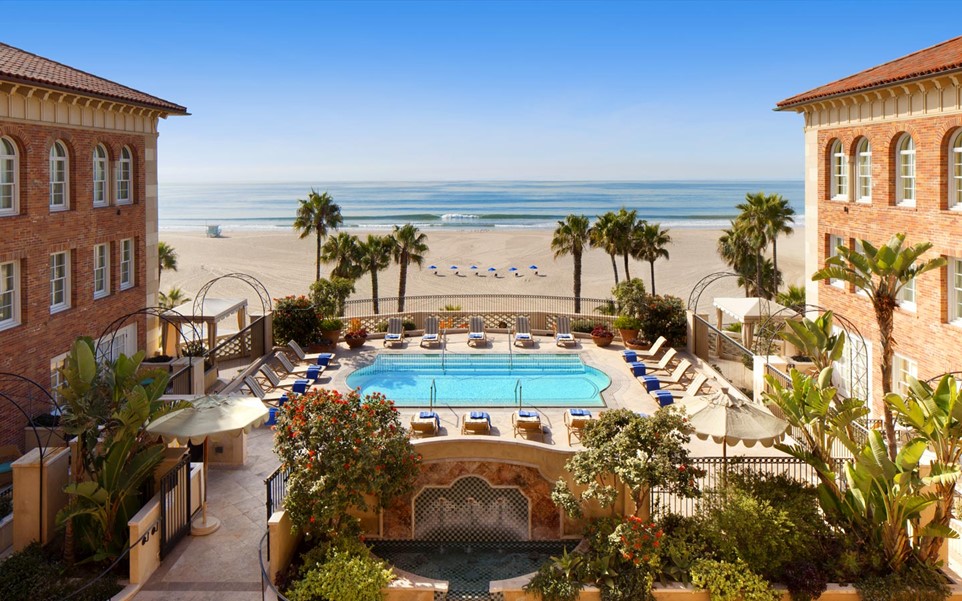
| (2021)* – View looking out toward the Santa Monica Bay from the Hotel Casa del Mar, 1910 Ocean Way. Photo courtesy of Hotel Casa del Mar |
| Historical Notes
In November 1997, the Edward Thomas Hospitality Corporation acquired the long vacant property and began an extensive restoration and redevelopment project designed to preserve the building’s historic character while returning it to active use as a luxury beachfront destination. Following a major renovation, the Casa del Mar Hotel officially reopened on November 1, 1999, restoring one of Santa Monica’s most recognizable oceanfront landmarks to its former prominence. |
 |
|
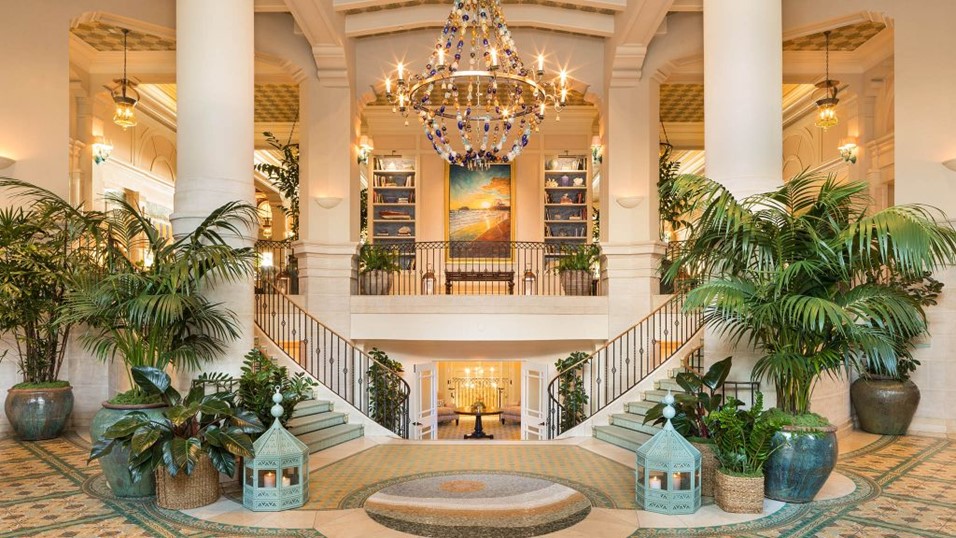
| (2021)* – View showing the ornate 1920s style lobby of the Hotel Casa del Mar. Photo courtesy of Hotel Casa del Mar |
| Historical Notes
Today, the restored Casa del Mar Hotel stands as one of the finest surviving examples of Southern California’s grand beach club era. Its richly detailed interiors, historic architectural character, and prominent oceanfront setting continue to evoke the glamour and elegance of Santa Monica’s coastal resort culture during the 1920s. The building is listed on the National Register of Historic Places and remains one of the most recognizable historic landmarks along the Southern California coastline. |
Research, writing, and image curation by Jack Feldman, Water and Power Associates, with editorial assistance.
* * * * * |
|
Other Sections of Interest |
|
Water and Power in Early LA |
|
Newest Additions |
New Search Index |

A new SEARCH INDEX has been added to help navigate through the thousands of topics and images found in our collection. Try it out for a test run.
Click HERE for Search Index |
* * * * * |
< Back